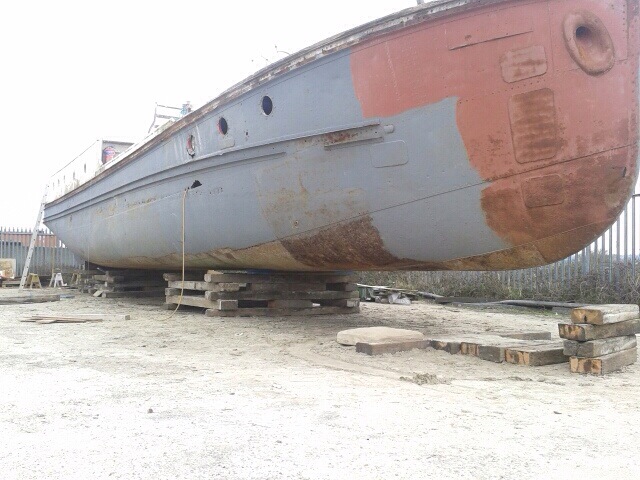
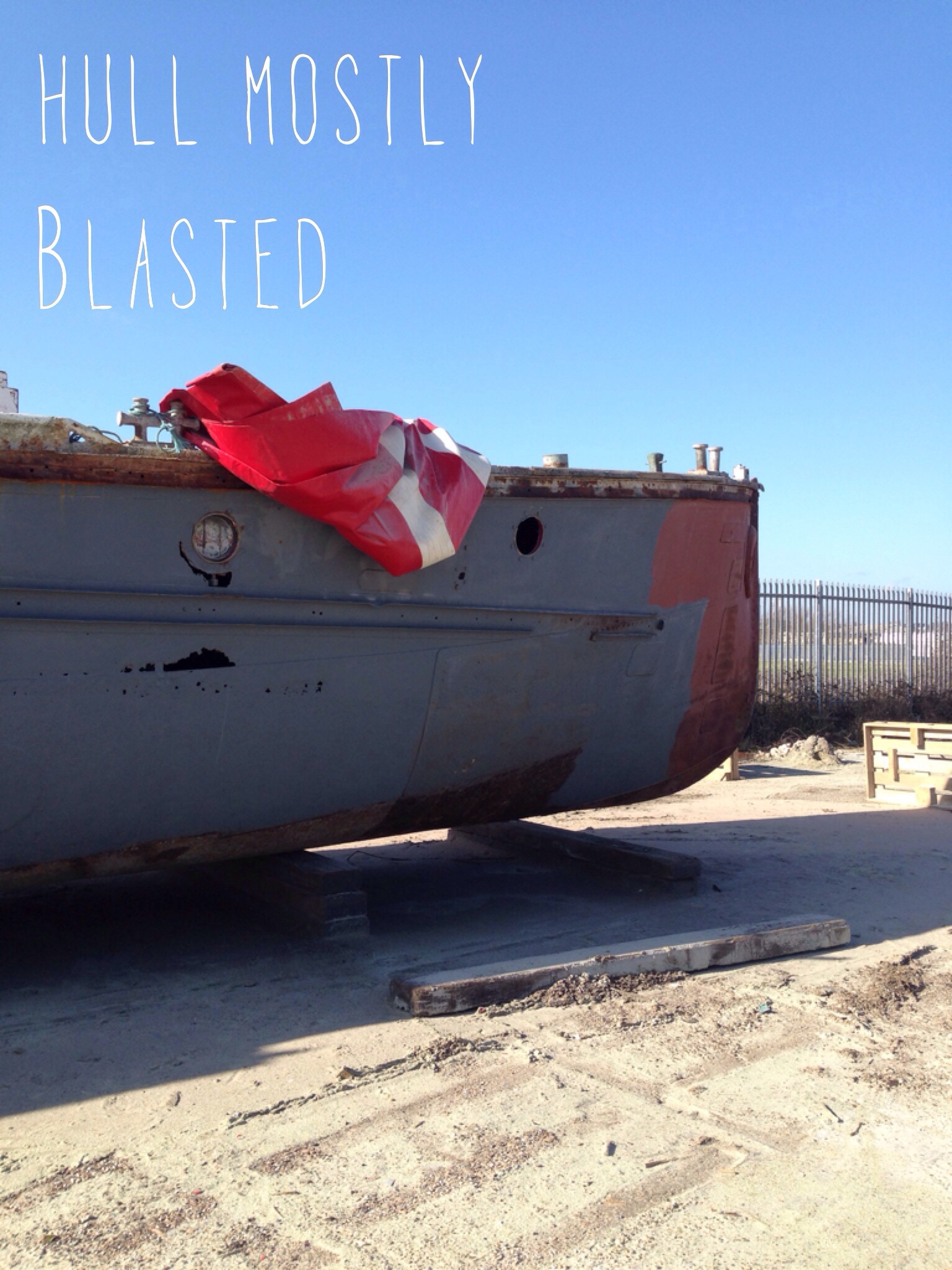
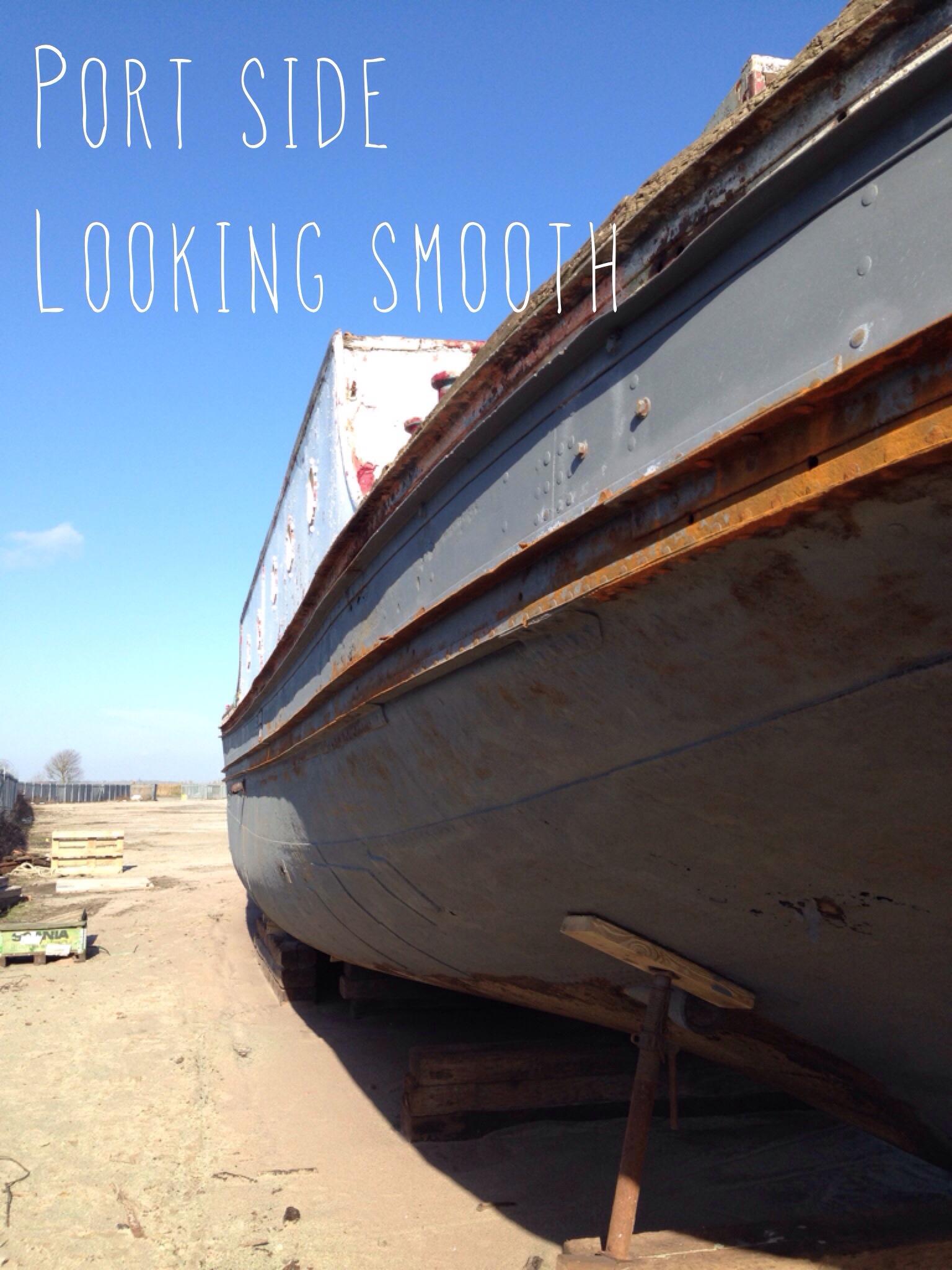
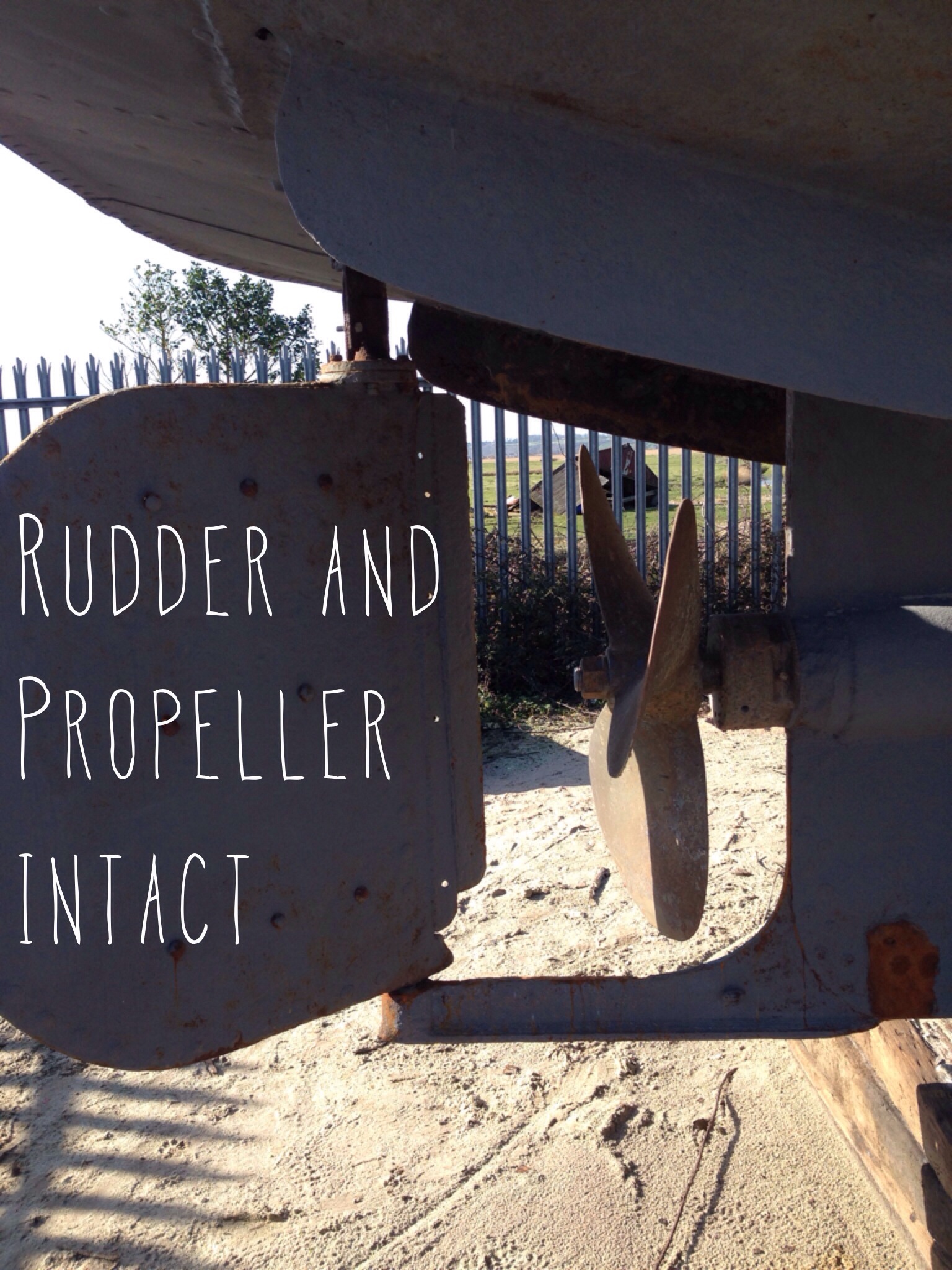
With the bottom on show for shotblasting and inspection.
With the bottom on show for shotblasting and inspection.
The survey yesterday was both nail biting and inspiring in equal measures and, like any exam or nerve wracking appointment, less scary than it had seemed in anticipation. Much of the damage and – to be frank – the gaping holes had been revealed through the shotblasting so I felt reasonably prepared for the verdict.
The survey process itself was also quite interesting and useful at this stage to see the processes, how the work is viewed and the list of what needs to be done broken down.
Basically (and please correct me if I’m wrong Aidan), the hull of the ship is divided into lettered plains that run as panels down the length of the ship. These are marked on the side of the hull alongside the ribs (the internal metal frame) which are numbered from stern to bow. This provides a grid to both take the thickness measurements and also identify where the damage is located for future reference and repair.
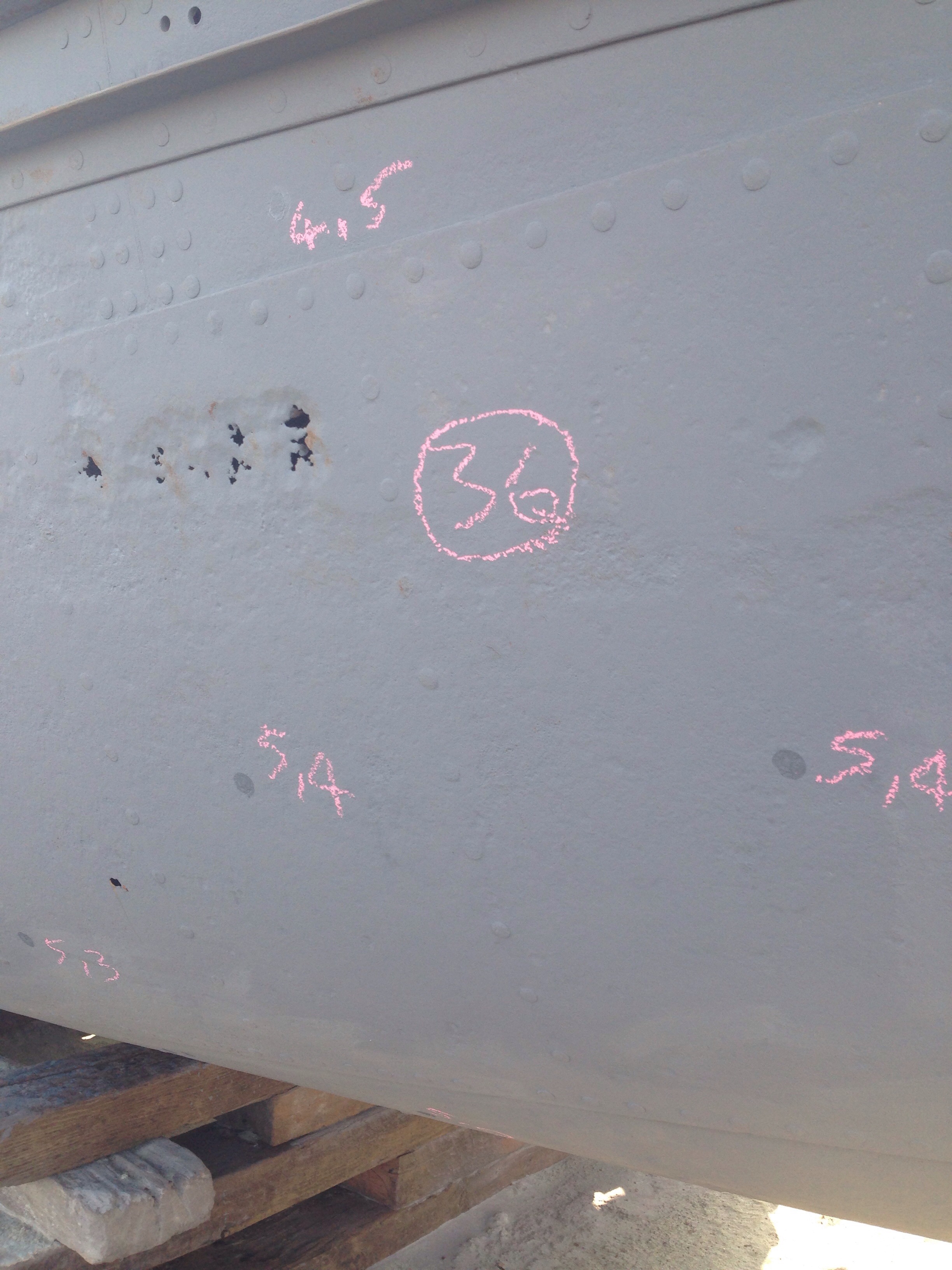
The picture above shows the different types of damage – the pitting, the corrosion, the rust and the gaping holes (I don’t think the last one is a technical term).
A key part of the survey is also the ultrasound thickness testing. This involves a device that looks a bit like an old fashioned portable tape recorder with microphone. The gel gunk goes on the end of the probe and it takes a measurement of the thickness of the hull. This was why it was crucial to shotblast off the rust and paint and barnacles and general crud and to remove the concrete in order to get the most accurate reading. 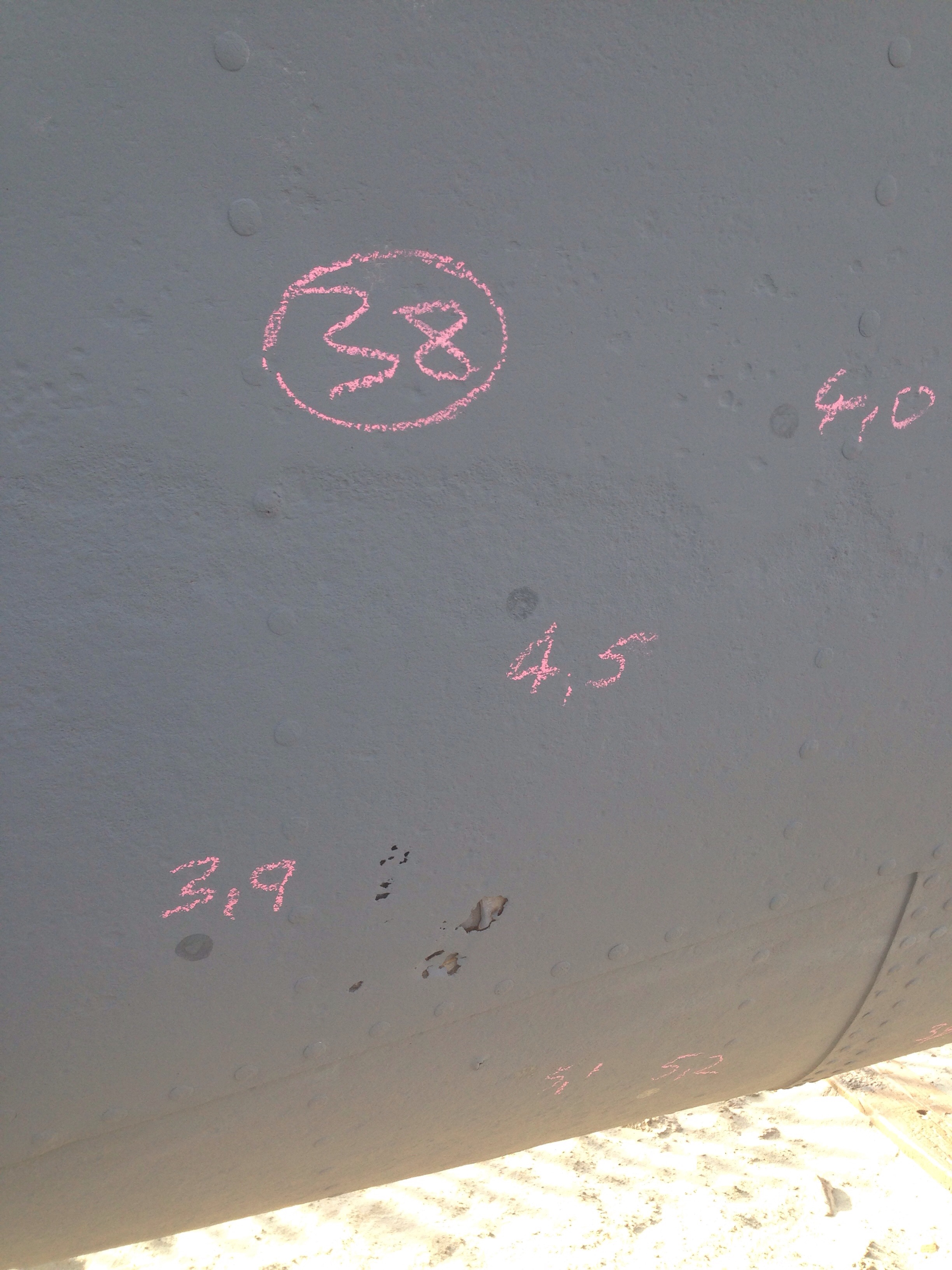
The hull is then chalked up with the different thickness measurements to allow it to be gauged where the weak areas are. Important as these are the “nasty surprises” where larger holes may be imminent.
It was originally made of 6mm steel so most of the numbers ranged between a three and a five. Obviously 5 is better and thicker than three with the pattern of the numbers and proximity of thick areas to thinner areas determining how and what is replaced.
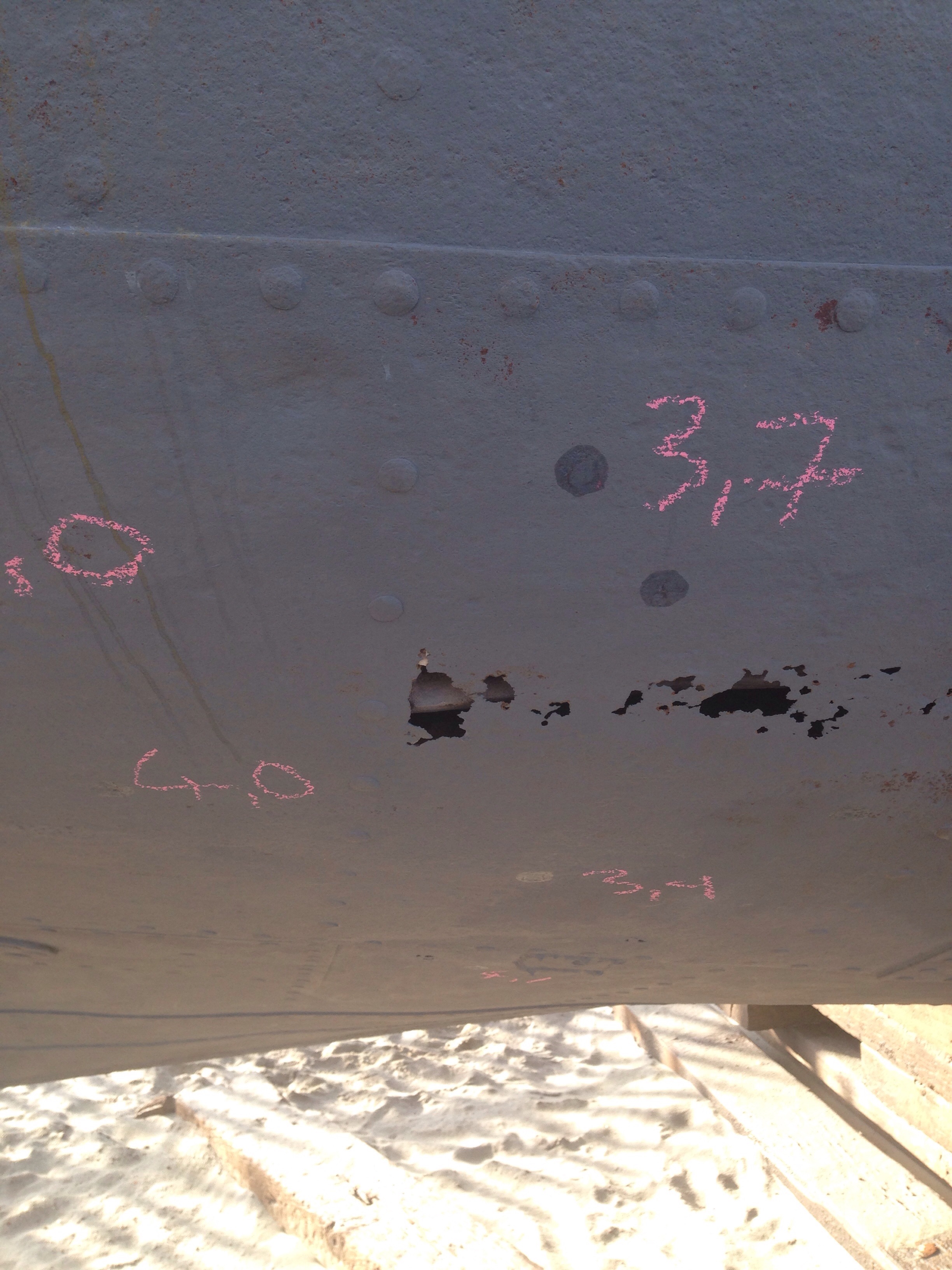
The full report will be forthcoming. This will include a final verdict on appropriate thicknesses bearing in mind the location of the metal on the hull, the age and its use going forwards. It would of course be the optimum solution to replate the whole hull but, as with any older house, car, object, it is a case of being pragmatic and prioritising.
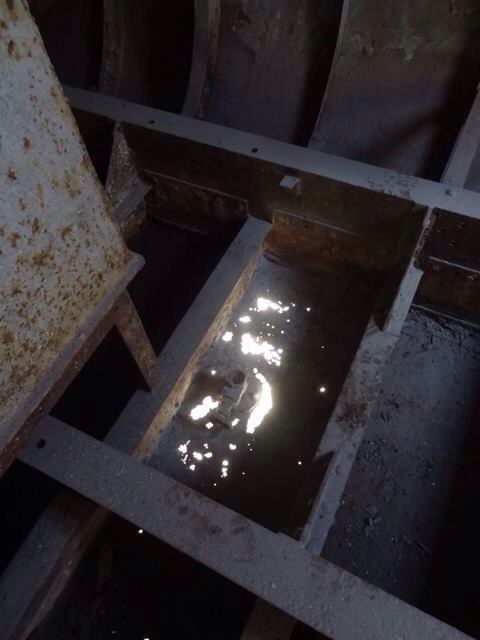
Quite a long old job. No electrics systems or heating or pumps to be included in the survey but a lot of careful examination of the hull. There is also a rather spectacular bit where the concrete once was and where the bottom of the hull has gone right through. I will show that in another photo when I can bare look at it again!
EDIT: here’s the hull photo taken by Toby the welder.

Strong gin and tonics at the ready.
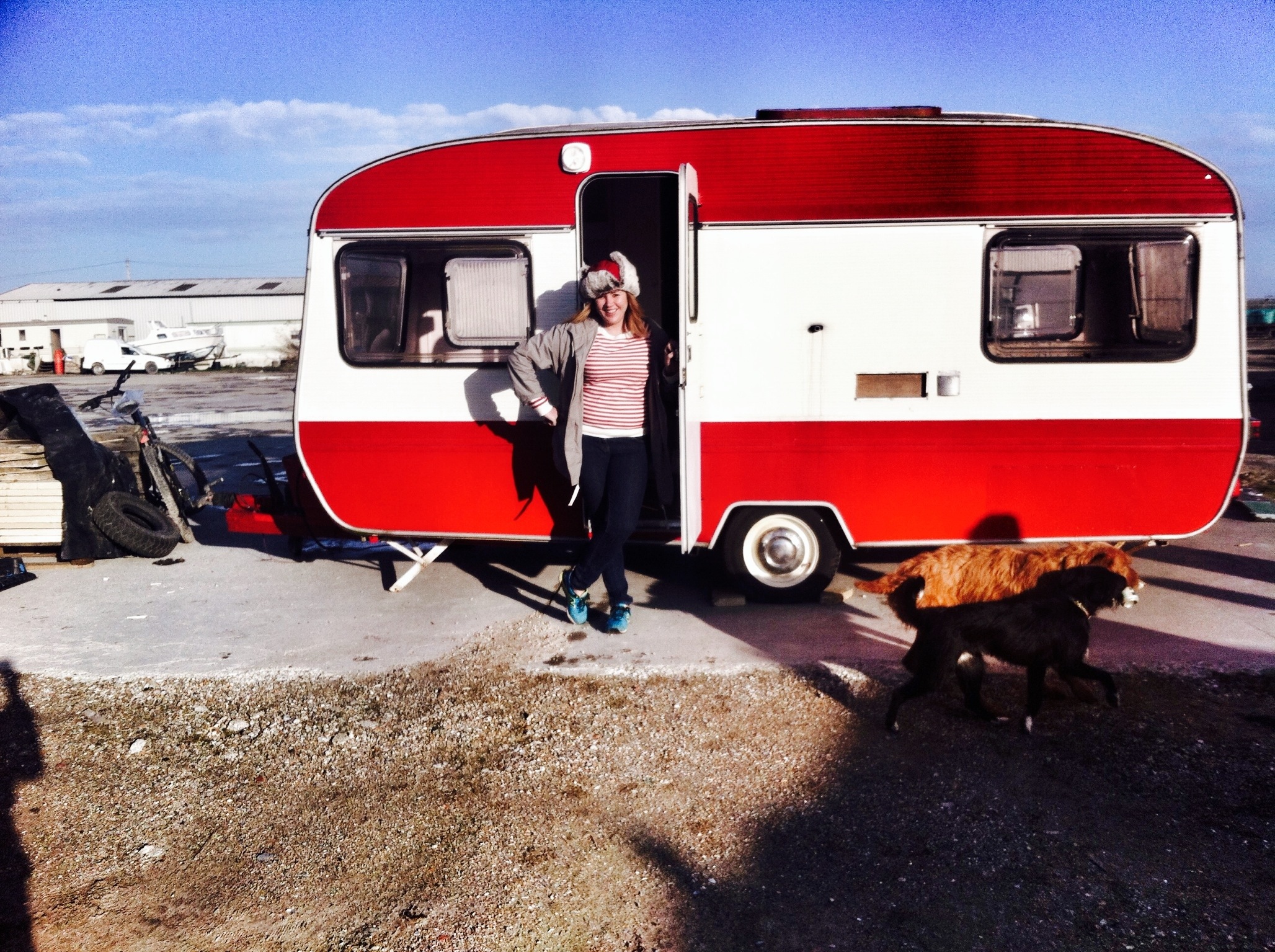
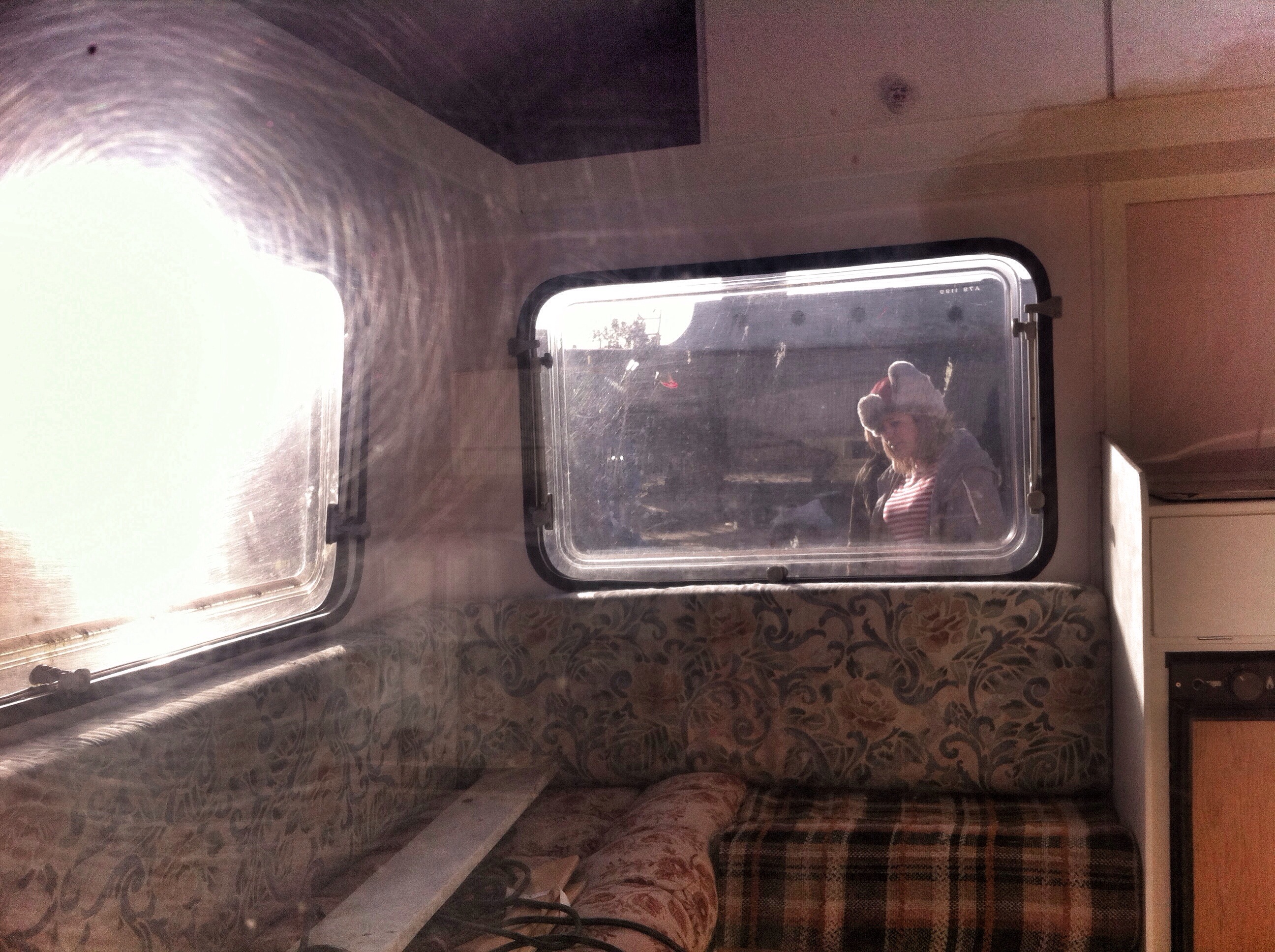
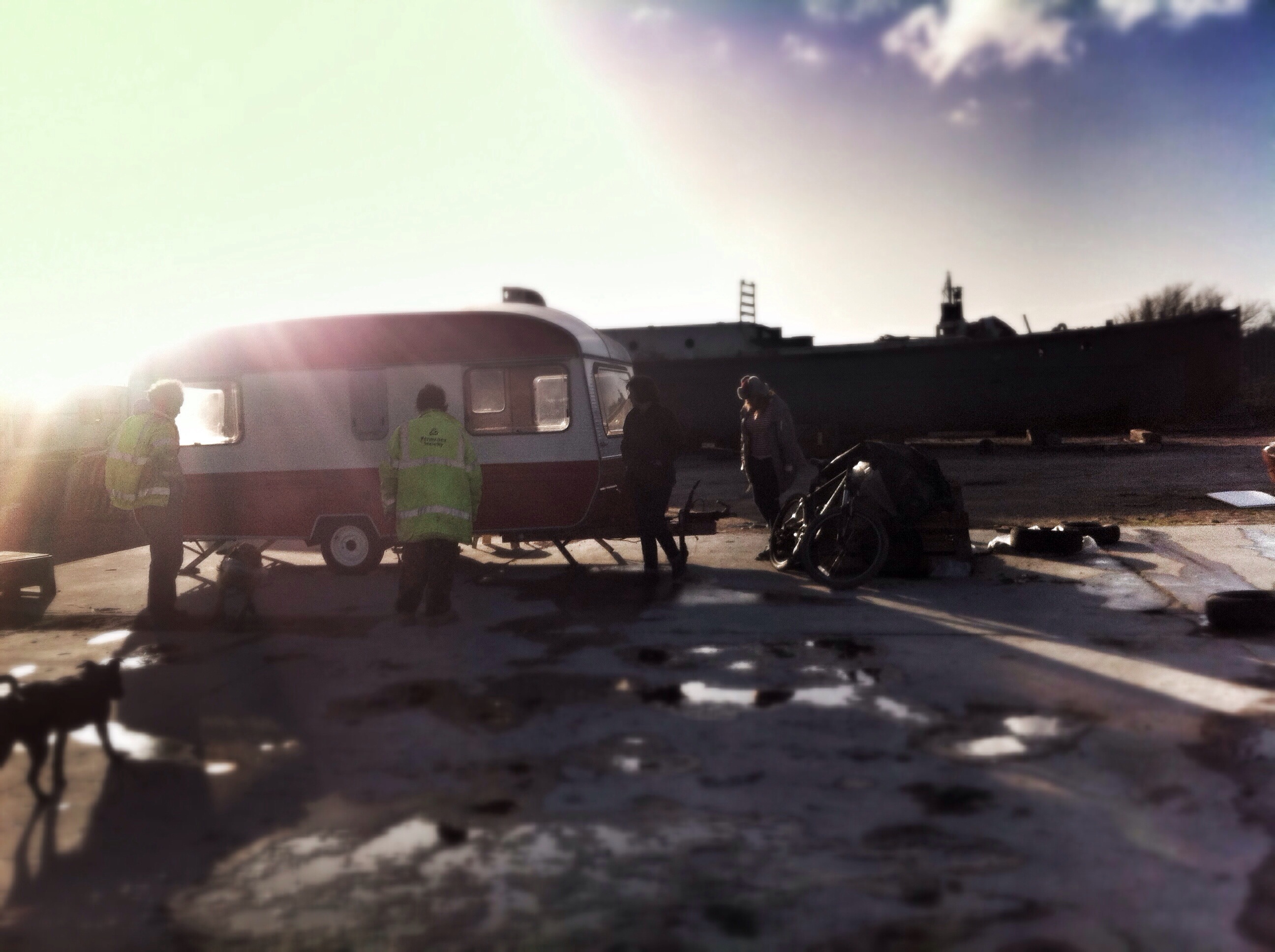

KSJ sampling extra spicy pot noodle. Nothing but the best catering.



I was introduced to this book at a semi-work related dinner while trying to introduce a Polish girl (Hello Marta) to custard. I don’t think she was impressed by the custard; however, on hearing about my project she suggested a book I might like to read. I really don’t know how a book about an American living on a houseboat in Paris made it to Poland but a copy was duly tracked down for me by Father Christmas.
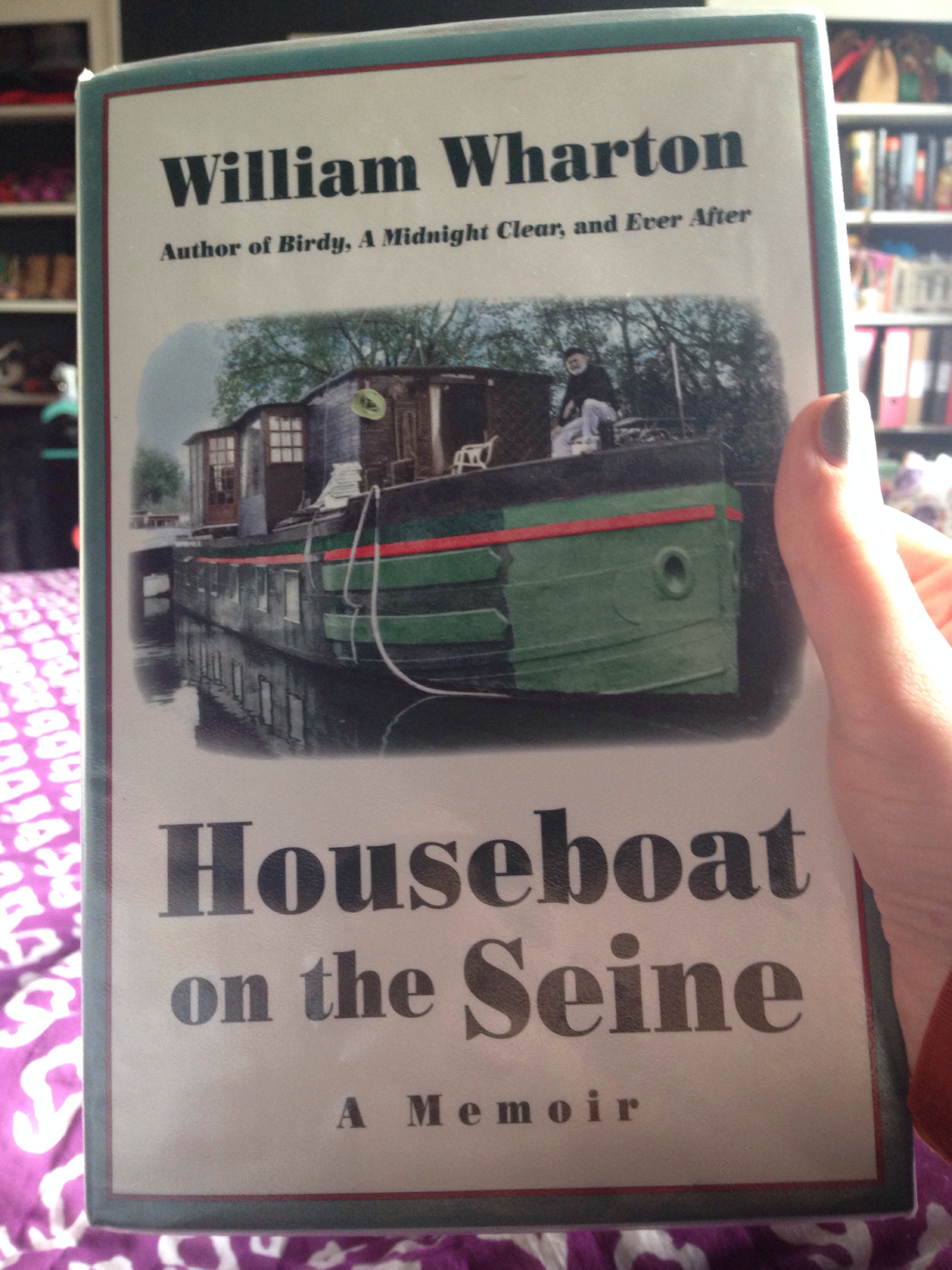
So the long and short of it is that there is someone about with a houseboat plan who is possibly crazier than I am. William Wharton took a decrepit and once sunk wooden boat and jammed it on top of an old oil barge to create a home. He then wood panelled the inside and constructed an aviary for canaries hanging off the back. Absolutely certifiably nuts.
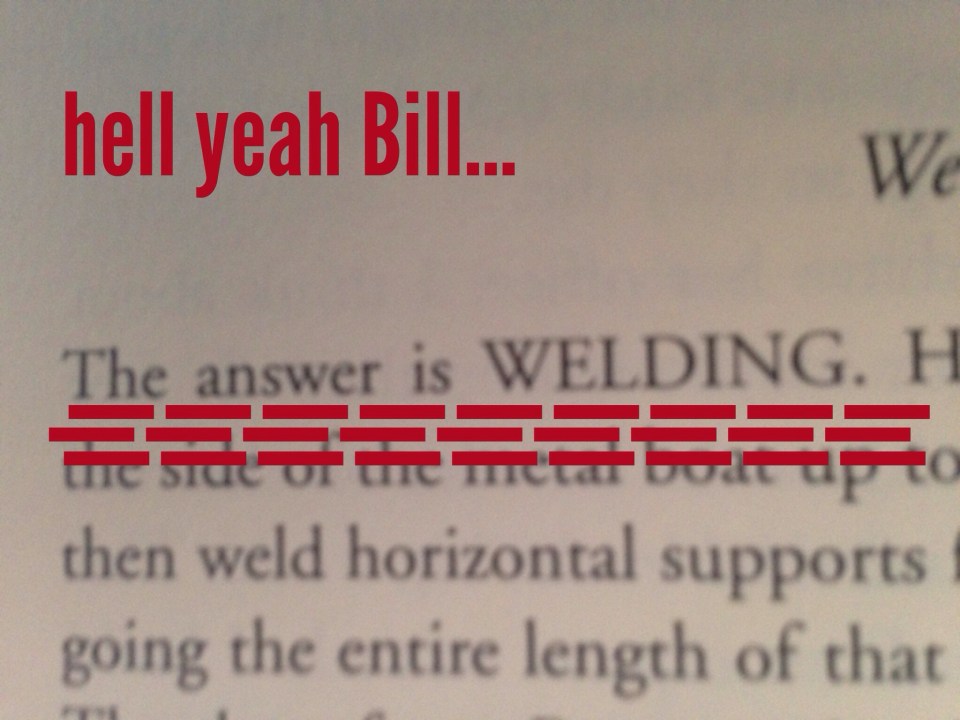
I should also mentioned that he did much of the work himself on a real shoestring. I am not sure – and can’t quite work out from the publishing date or any references in the text – when the book was set. I would guess perhaps in the early 1970s. This would explain the complete lack of any health and safety as the welded much of the hull standing in half a foot of oil with only a bucket of sand to douse any flames.
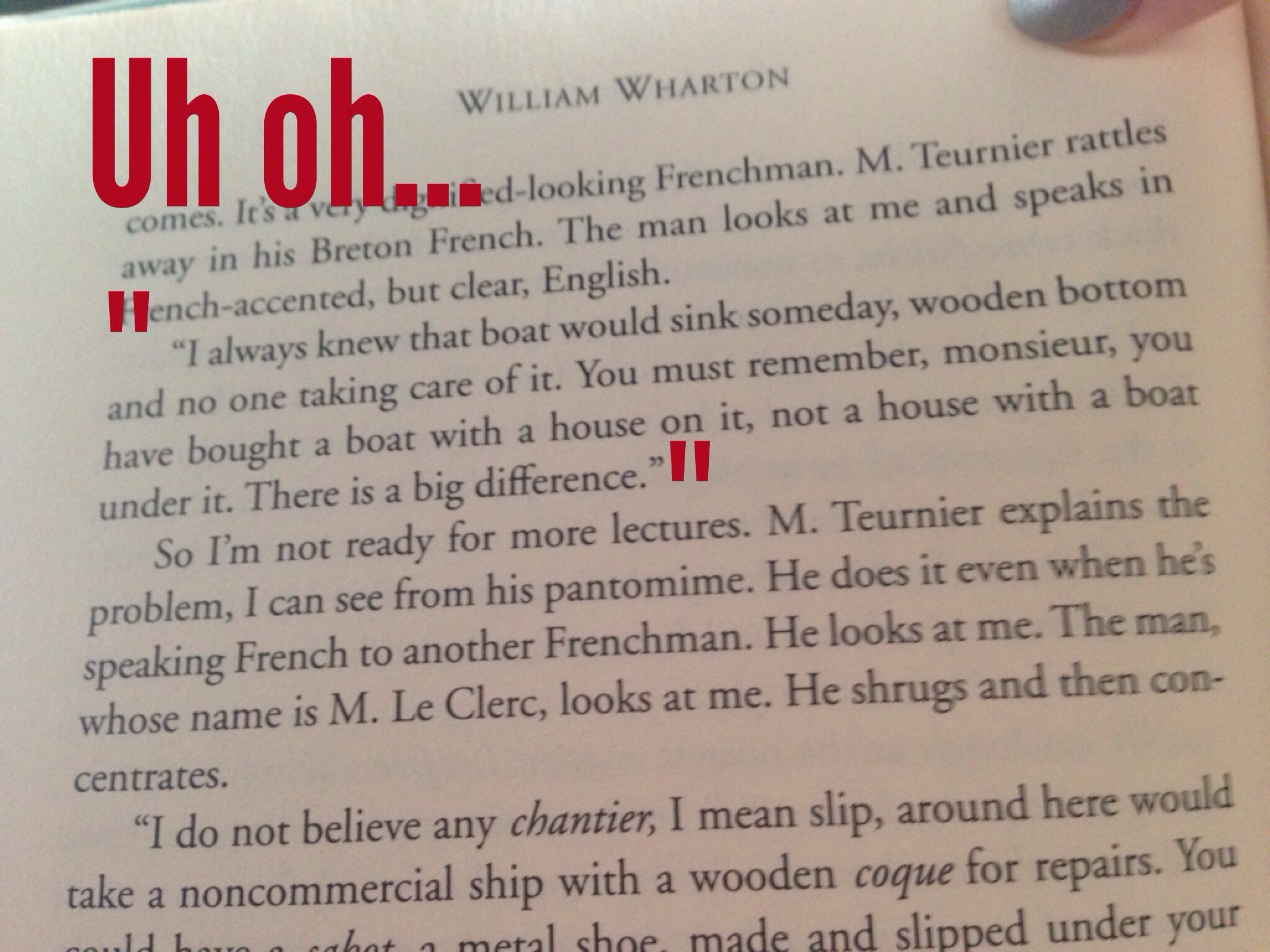
The story was quite heartening as Wharton got there in the end and seemed to produce something quite special. He is pretty engaging (albeit in a slightly gung ho American type way) and the book is peppered with a range of bon mots.
The only thing I couldn’t fathom was Wharton’s wife Rosemary. She left her to raise three children and work full time in a kindergarten while he fannied around with the boat and spend time and time again their “last 100 francs” on some bit of steel or wood to add to the boat. How she did not strangle him I don’t know.
Now, off to plan my Canary aviary to hang off the back of Beta III….


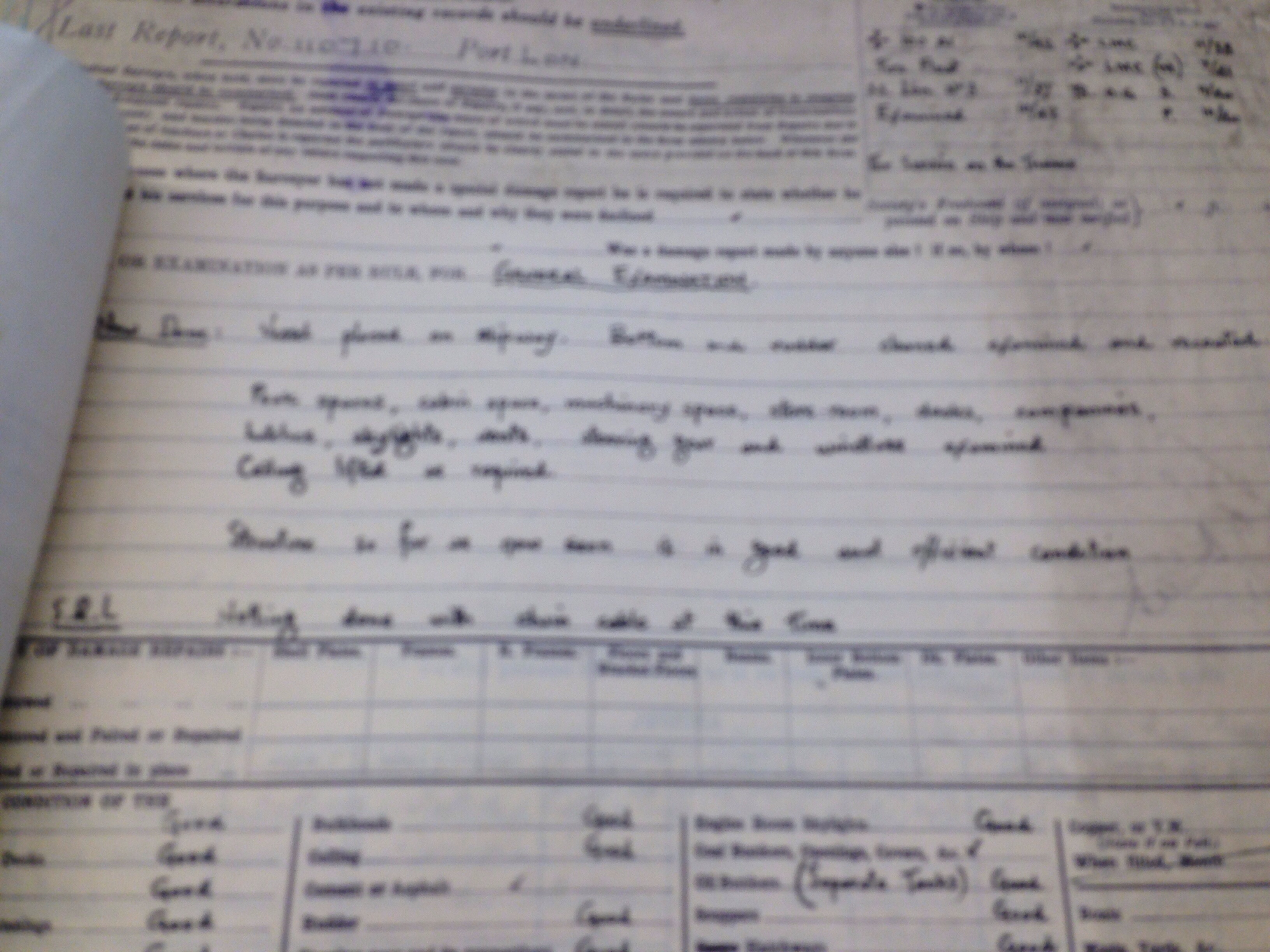
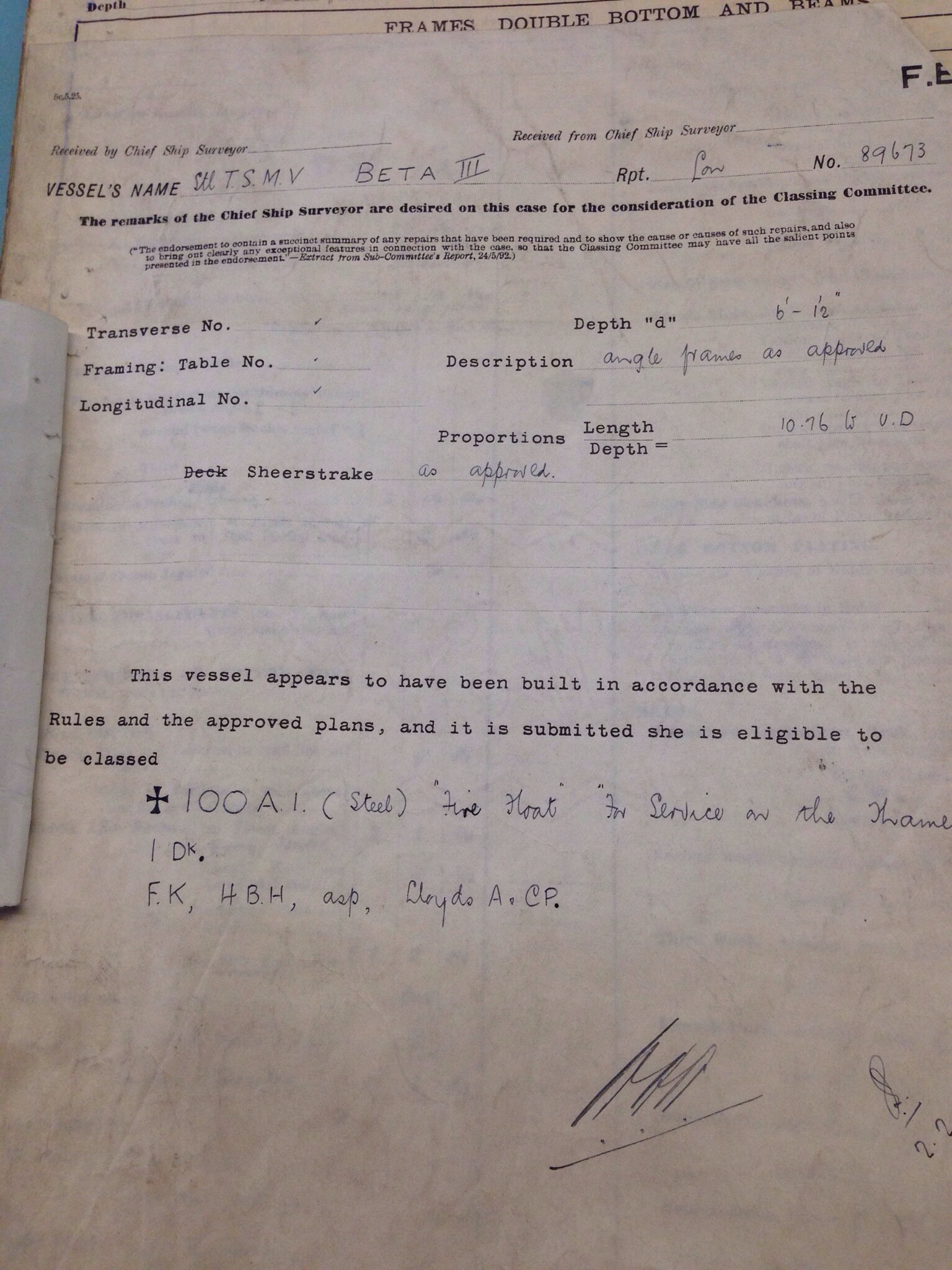
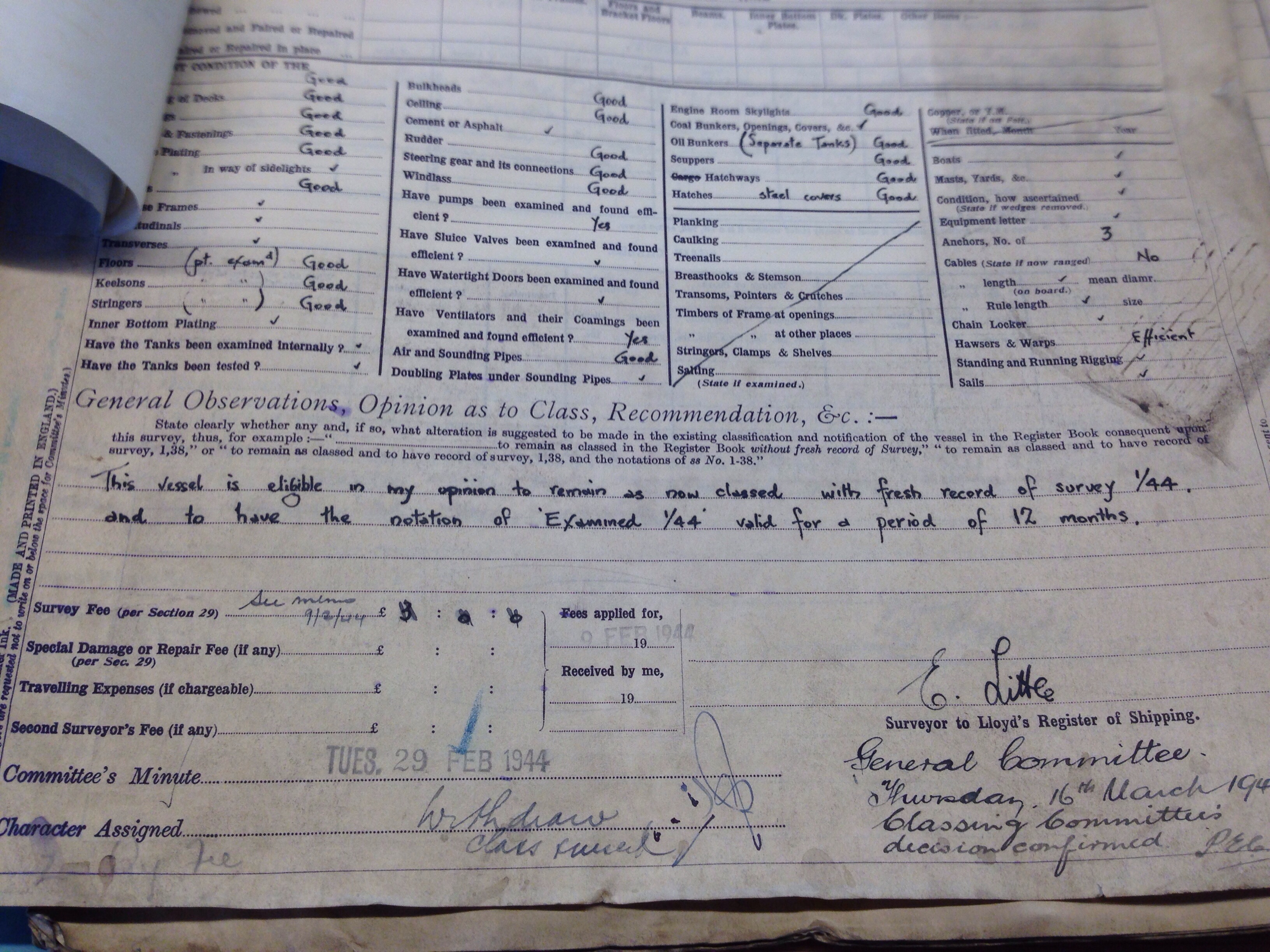

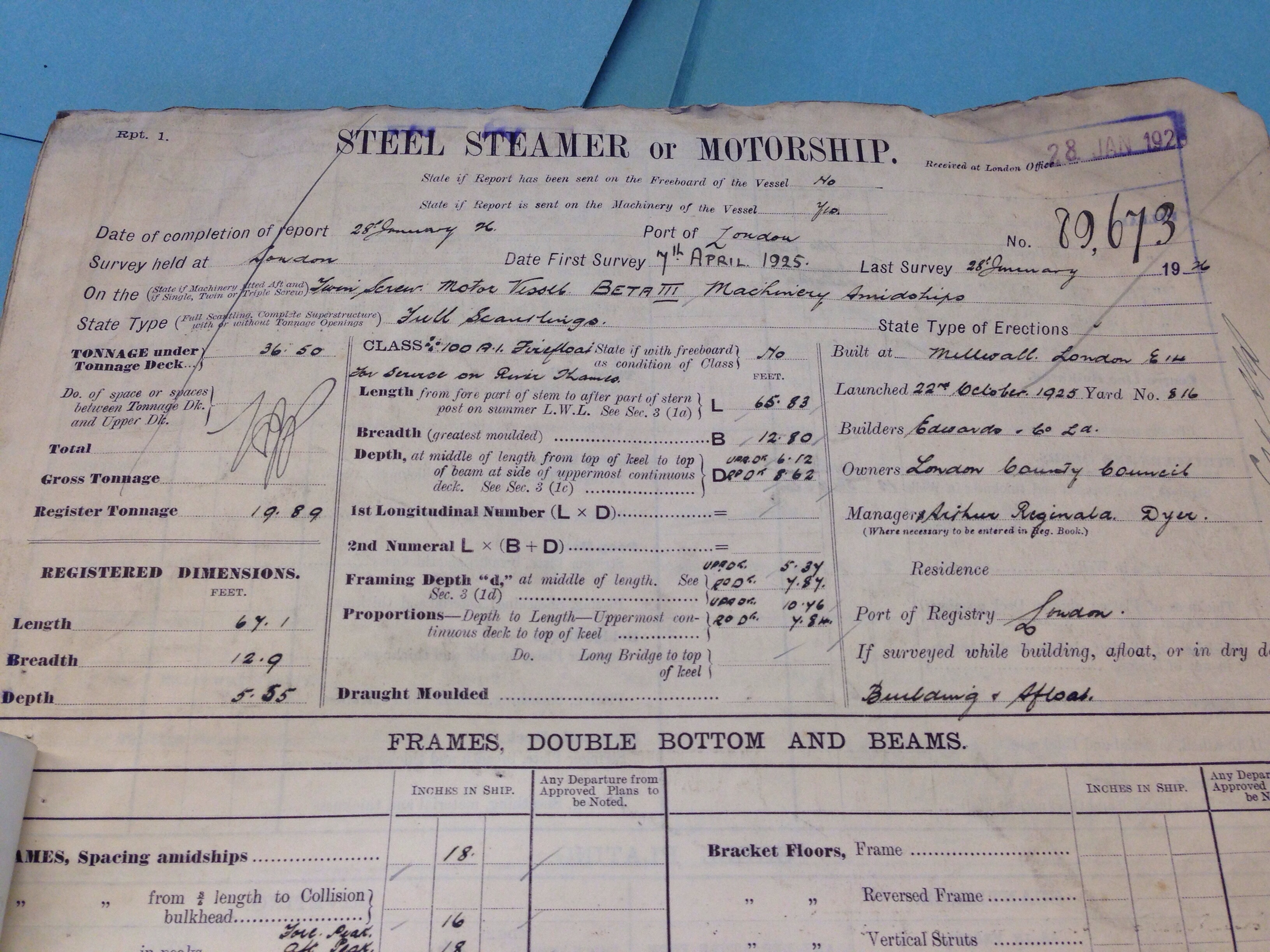

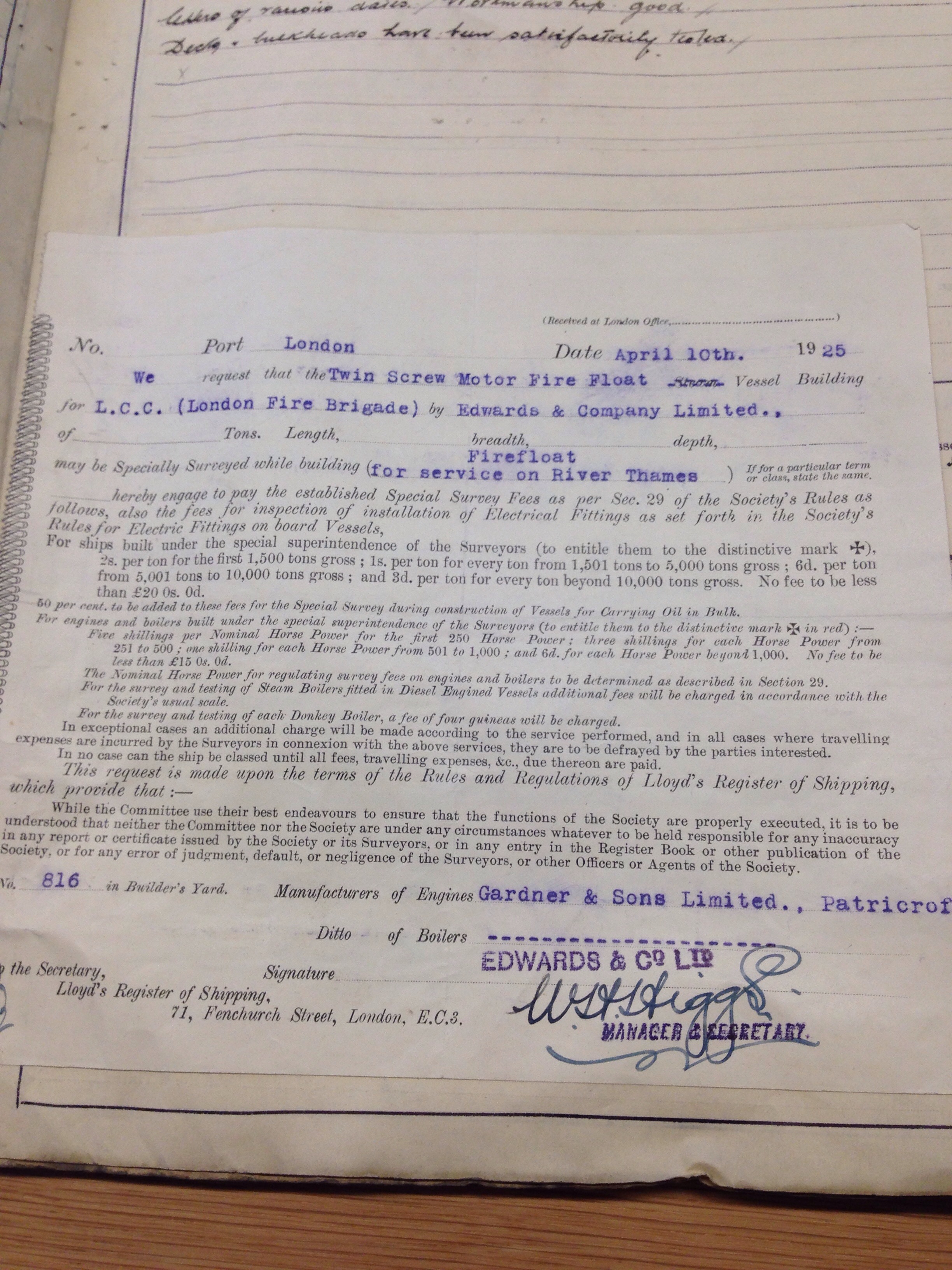


The National Maritime Museum confirmed that they held a range of Lloyds Surveys for Beta III and also some of the plans to do with the boat’s construction. They were able to bring them to their reading room but the only catch was they were shutting for a month for refurbishment. Gizzi and I whizzed over there on Friday to take a look.
It is probably easier to bust into the safes at the Bank of England than get into any library or archive. ID, bag emptying, confiscation of pens, and one dodgy dodgy photo later I was in.

Fortunately it all proved very worthwhile and made the frustrating cross-London journey while thick with flu all worthwhile.
The dossier I was given contained plans for Beta III’s construction dated from 1925. This is excellent news on two counts. Firstly, the first job for the architect would be to draw up some plans to work from, so if I already have these showing the exact dimensions, this is one less thing to pay for. Secondly, the deck has been lowered at some point. The plans show its original state and these dimensions thereby making it much easier to reinstate.
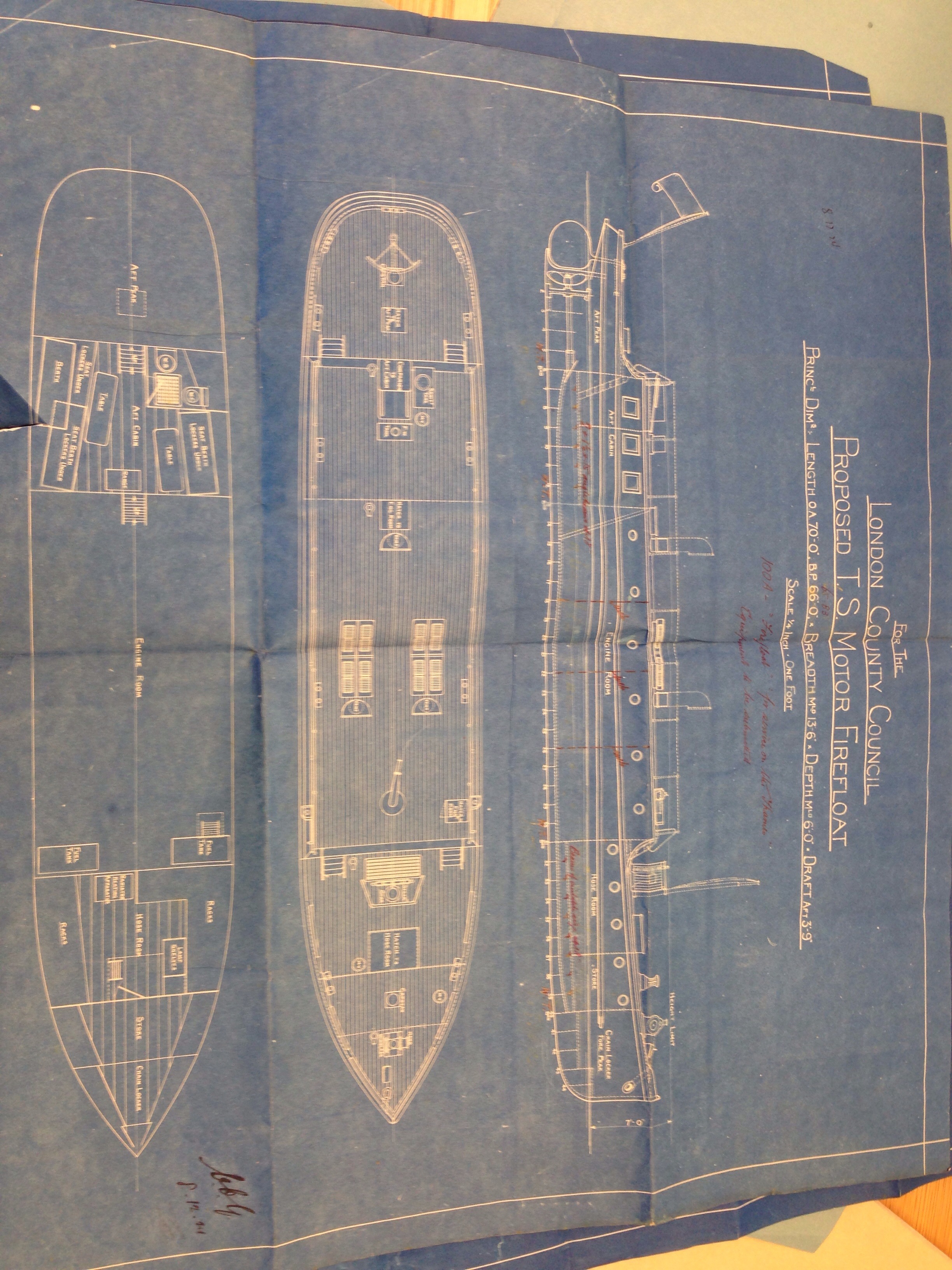
A lot of the plans had annotations in red in and seem to have been produced as different versions. The dates on the bottom corners gave some idea about their order. It will be another job to sit down and work out how the plans evolved over time.
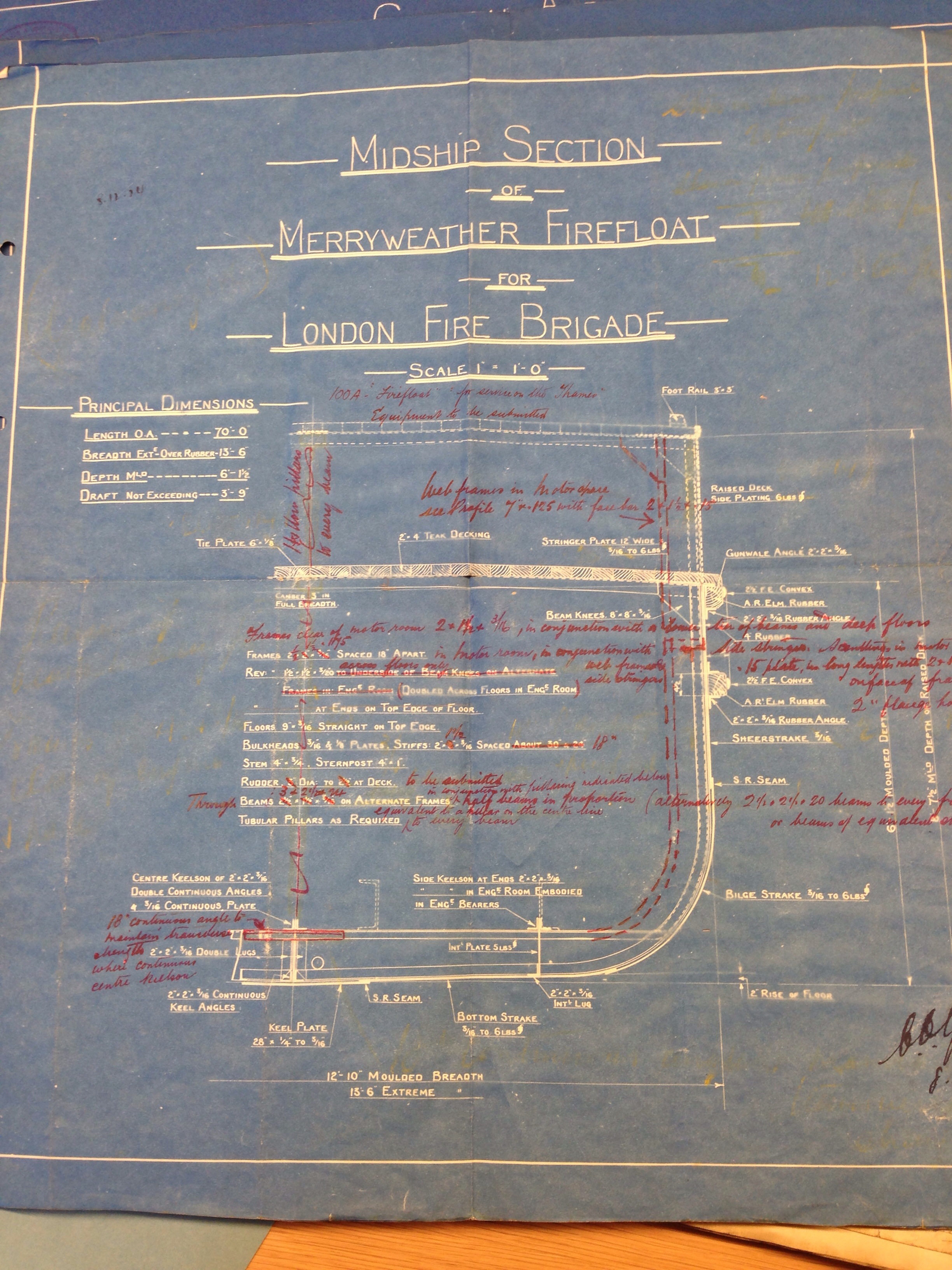
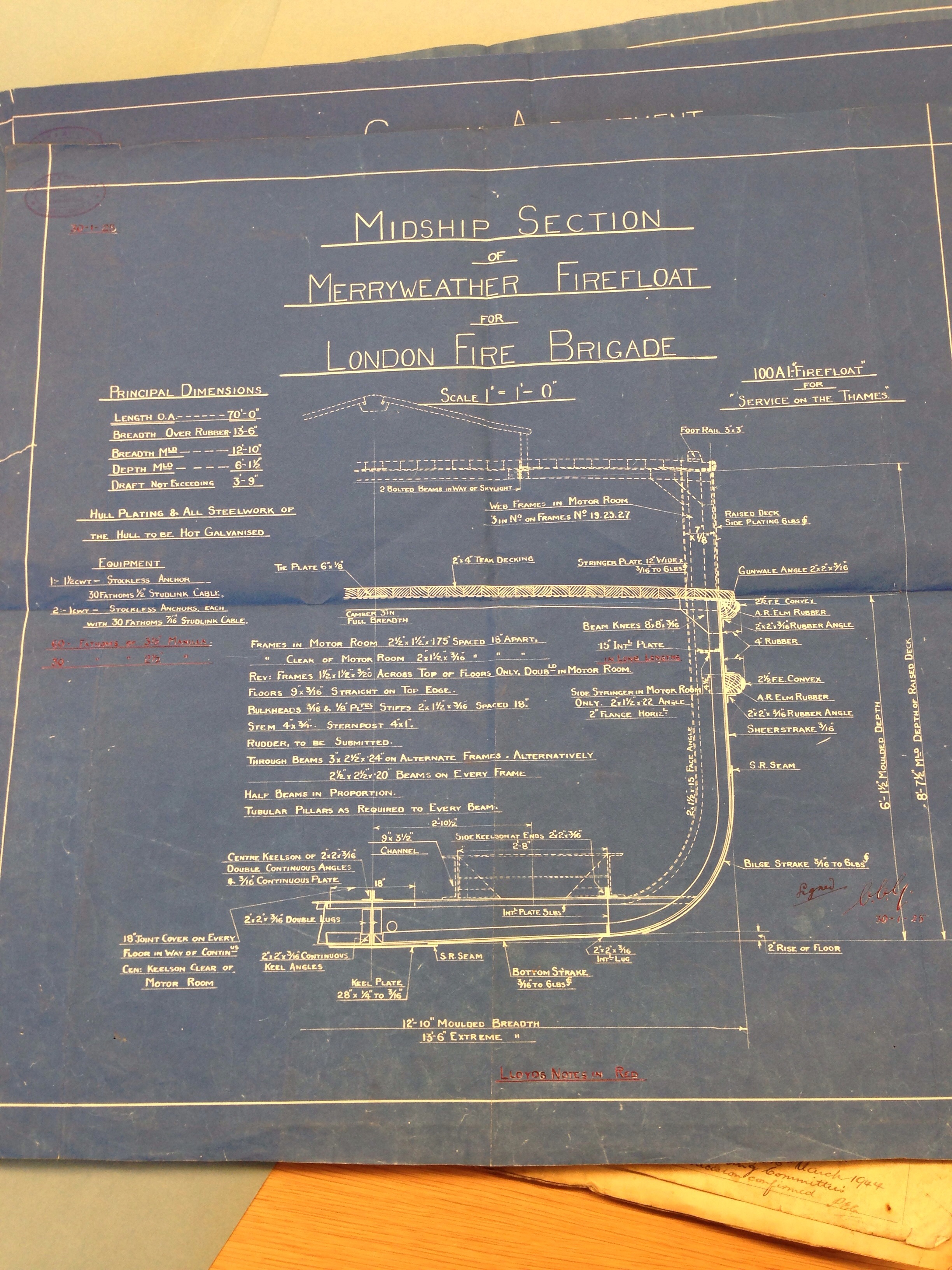
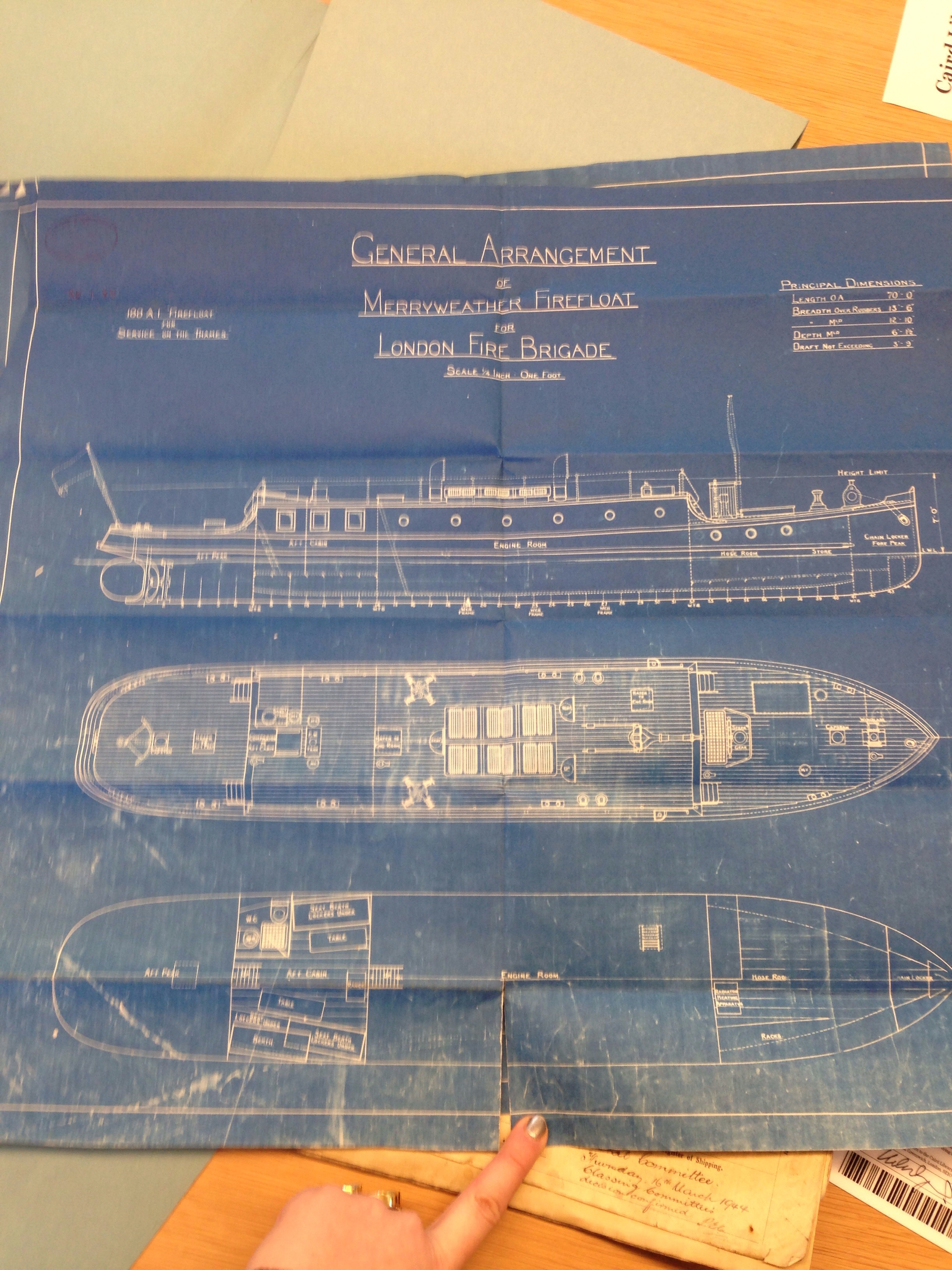
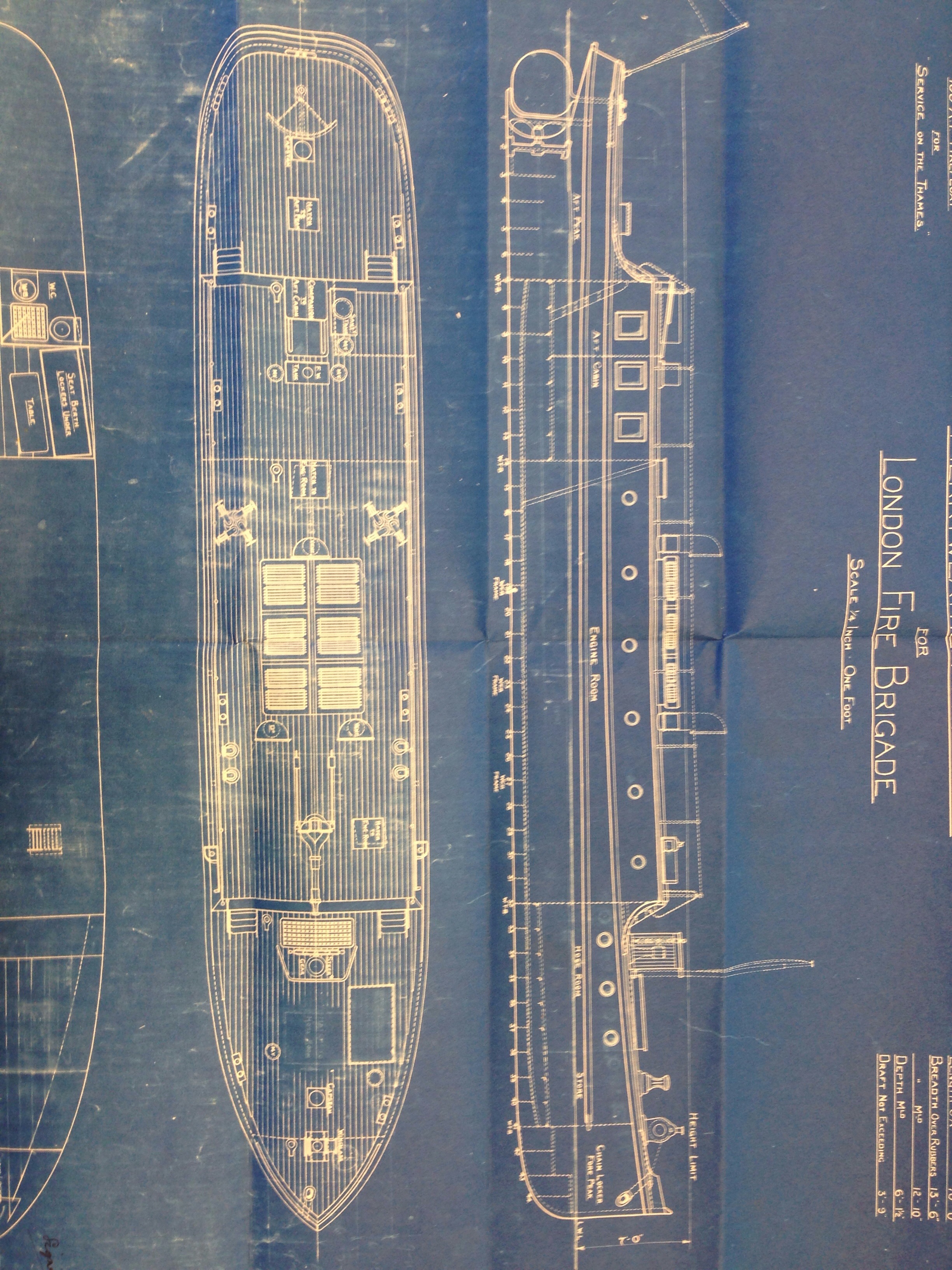
(Excuse the pointy ET finger)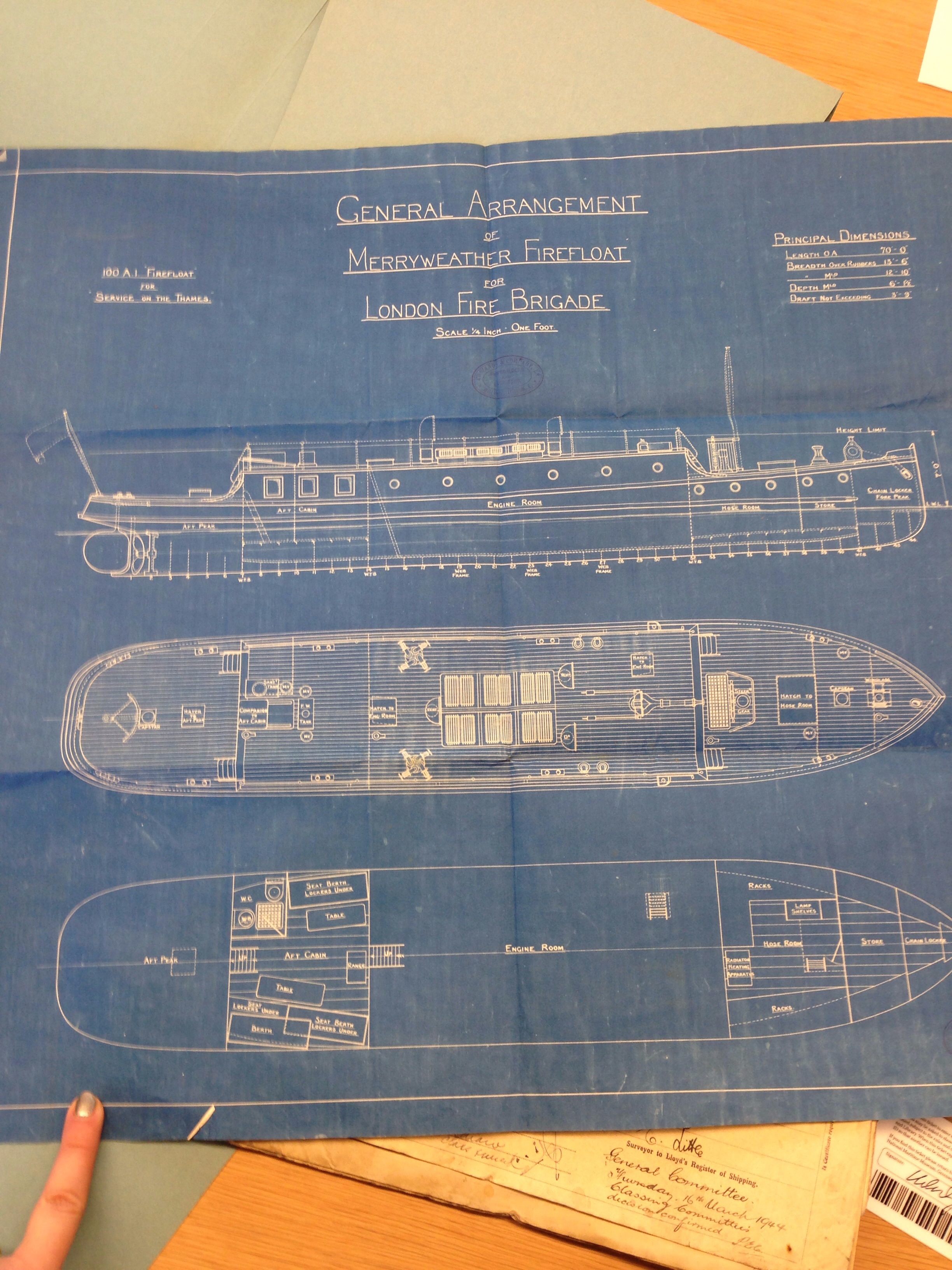 These quick photos are slightly poor quality. However, the museum have this super scanning machine so I have much higher resolution copies as PDFs.
I am in danger of becoming a Shotblasting bore here, but just see for yourselves. Amazing.
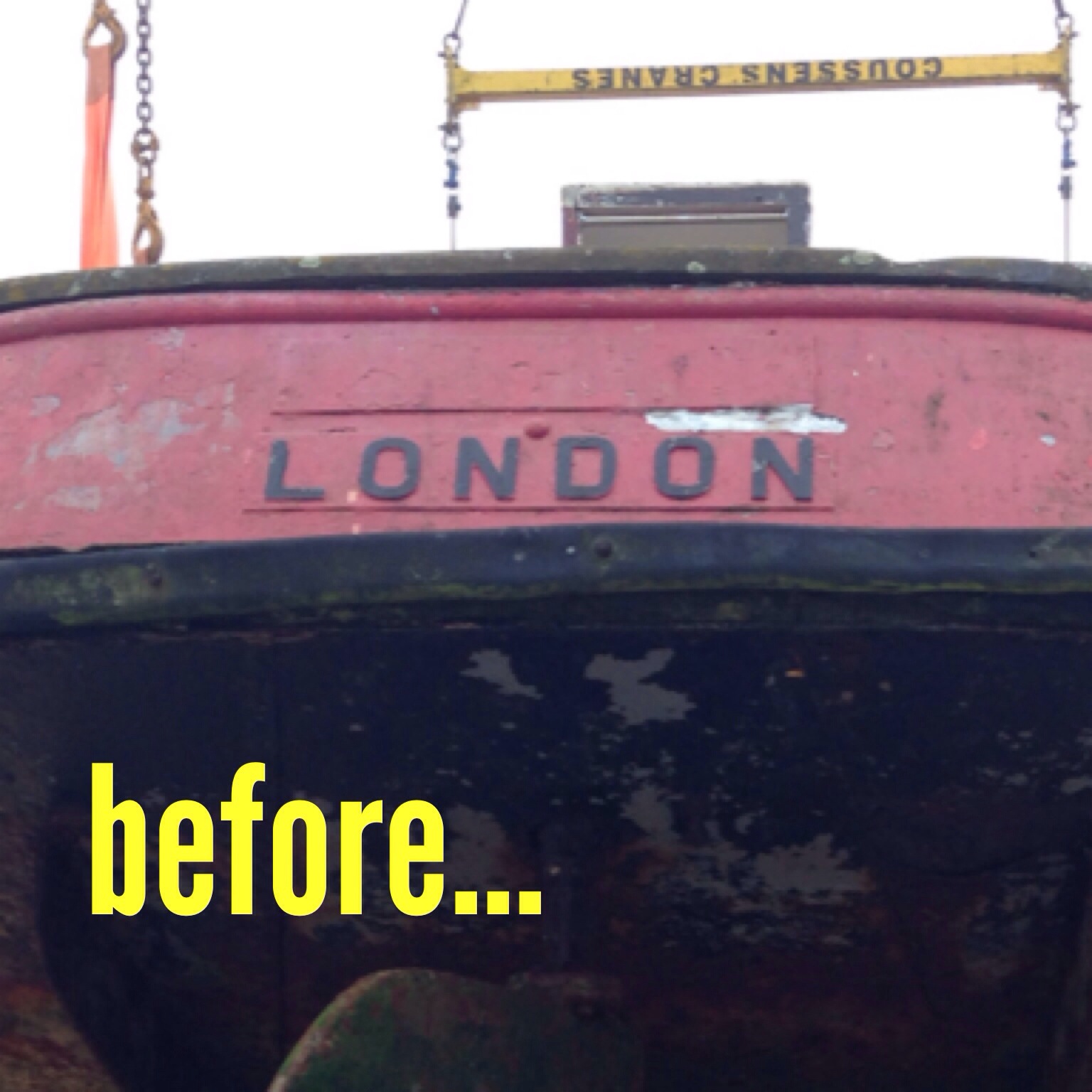
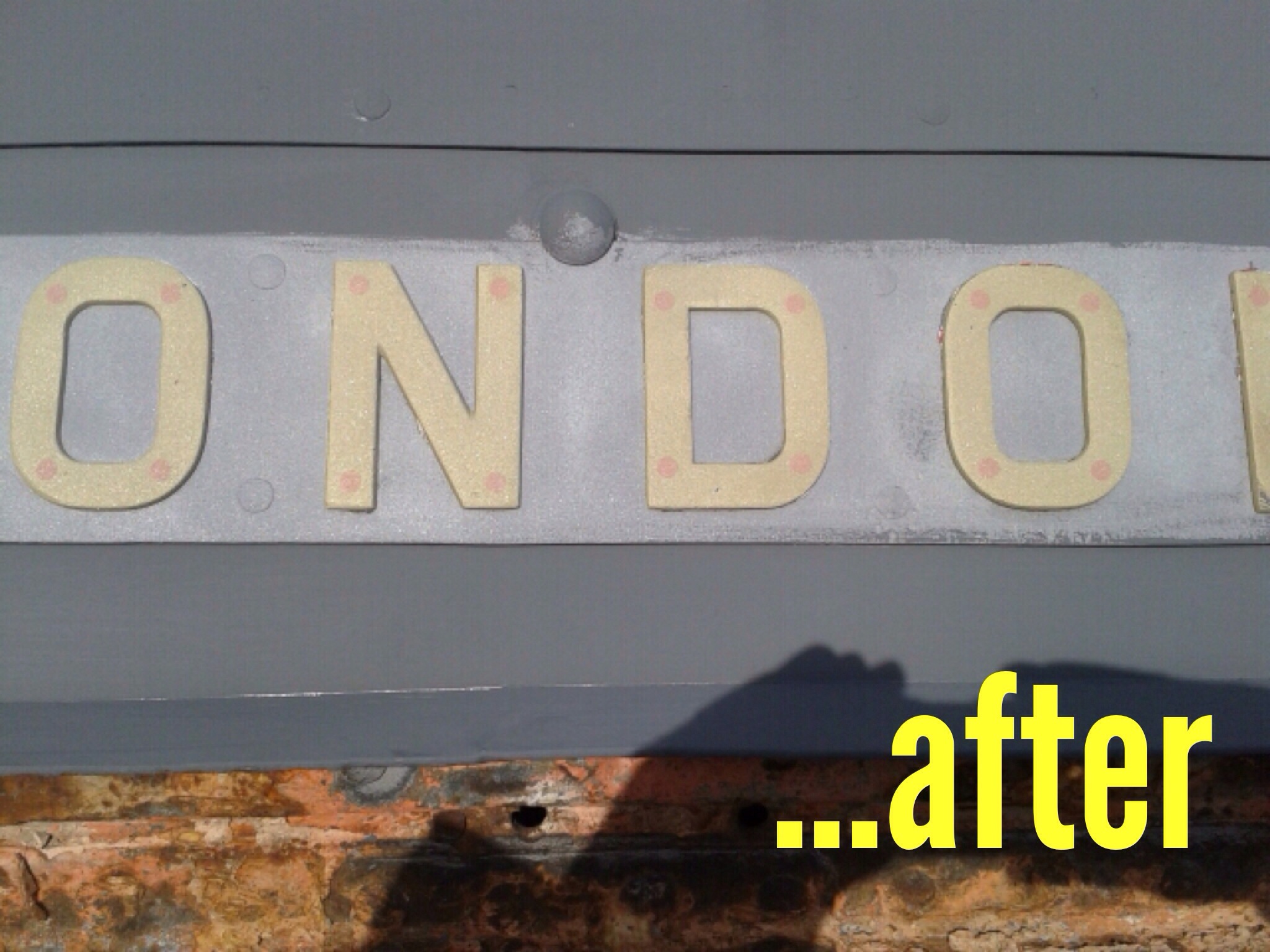
The only difficulty is resisting the temptation to blast the crap out of everything.

“Fireboat Beta III at R4Z river fire station, at Cherry Garden Pier, Rotherhithe, on the Thames opposite Wapping. All the River Thames Formation craft were given unique identification. T Beta III was one of the three London Fire Brigade fireboats brought into war service together with the Massey Shaw and Gamma III. Date: 1942”
Bit dubious about this one as the number of windows are different…

“Civilian marine engineers on the Beta III fireboat during her sea trials prior to being placed in operational service. Date: late 1920s”
Also some extra info about what was where:
“Gamma II was stationed at the Lambeth river fire station (R1) opposite the London Fire Brigade headquarters building on the Albert Embankment, SE1. It was one of three fireboats in the Brigade’s fireboat fleet at the time this picture was taken, the other two fireboats being the Massey Shaw moored at Blackfriars and Beta III moored at Cherry Garden Pier. Date: late 1940s”
The picture below is Beta, the predecessor to Beta III:
 |
“A fire float and tug were first introduced in 1877 and used until 1900 when they were replaced by shallow draft fireboats. Whilst the fire float was only a fire pump mounted in a barge which the tug transported to the scene of the fire, the Brigade introduced self-propelled steam fireboats and soon acquired three of these: Alpha, Beta and Gamma. The fireboat pictured is Beta, moored by Charing Cross railway bridge on the River Thames. Date: 1904”

“Fireboat Beta alongside Cherry Garden Pier, Rotherhithe, in the Port of London, downstream from Tower Bridge. The twin funnelled Beta had a large capacity firefighting fitted monitor near its prow. The monitor could throw a powerful column of water, of many hundreds of gallons per minute, to the height of London’s tallest riverside wharves. With a draft of only 19 inches this fireboat could operate at very low tides. Date: 1920s”
 </a
</a betaiiifireboat