IN THE ARCHIVES – Festival of Britain

20140324-095640.jpg

20140216-214523.jpg

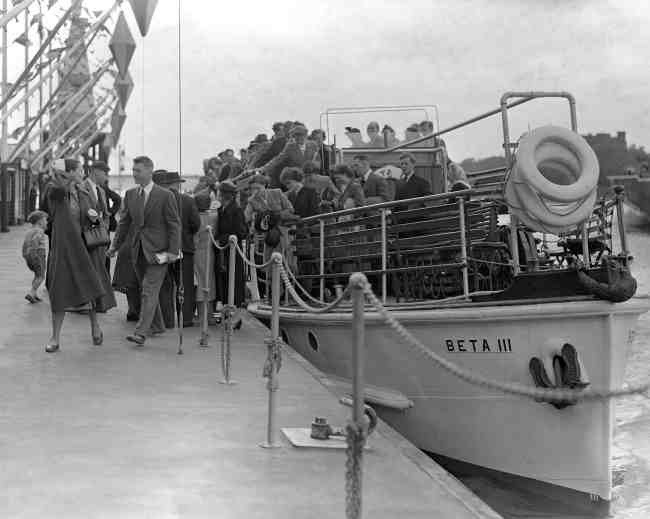
Betty in 1951 at the Festival of Britain. Note the gorgeous railings. More info from Ben:

“She was one of many boats acting as riverbuses for the festival of Britain in 1951 .  She was licensed in the 100-200 passenger category and was owned by R.F Jackson at the time. “

Big thanks to Ben from Liquid Highway for finding and emailing it.

Based on this I have found out a few more little fact-ettes… From an article about City Cruises:

The core of the initial City Cruises fleet in 1989 came from Thames Tripping (Westminster) who supplied ElthamWestminster and Witheycombe.Mayflower Garden came from River Functions (Thames). The various “Rose” boats of Thompson Launches joined City Cruises from 1993. The Thompson Brothers had acquired their first boat, St Patrick, in 1929, and put her on the Westminster to Tower service. Thompson Launches Ltd was incorporated in 1935. The Beta III joined their fleet in 1959 from Jackson Bros.

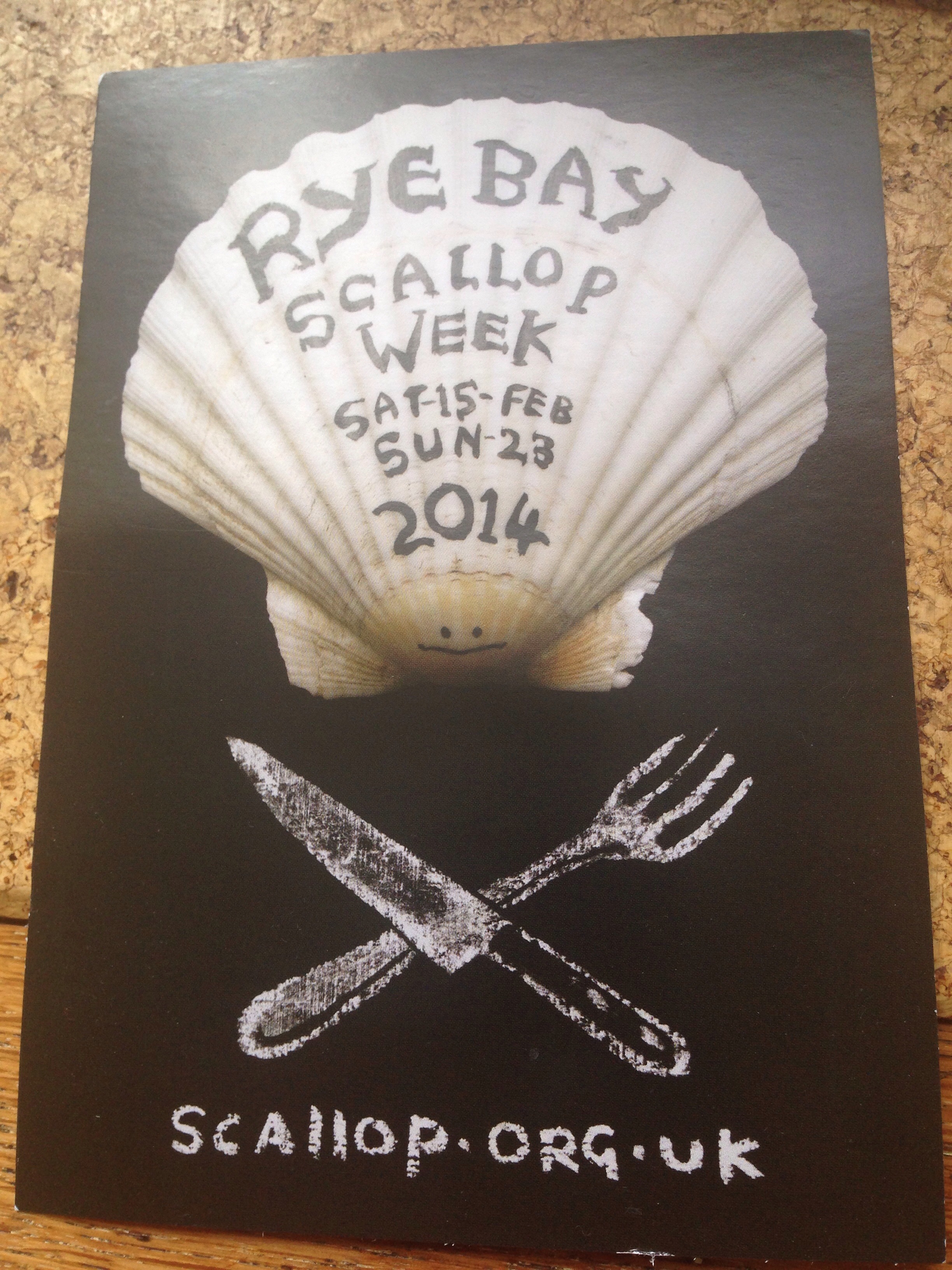
A date for your diaries

20140215-121947.jpg

I can personally attest that the seafood in Rye is great, often stopping at the fish shack shop place on the way out of town, particularly when needing to cheer myself up over the holey and hokey hull.

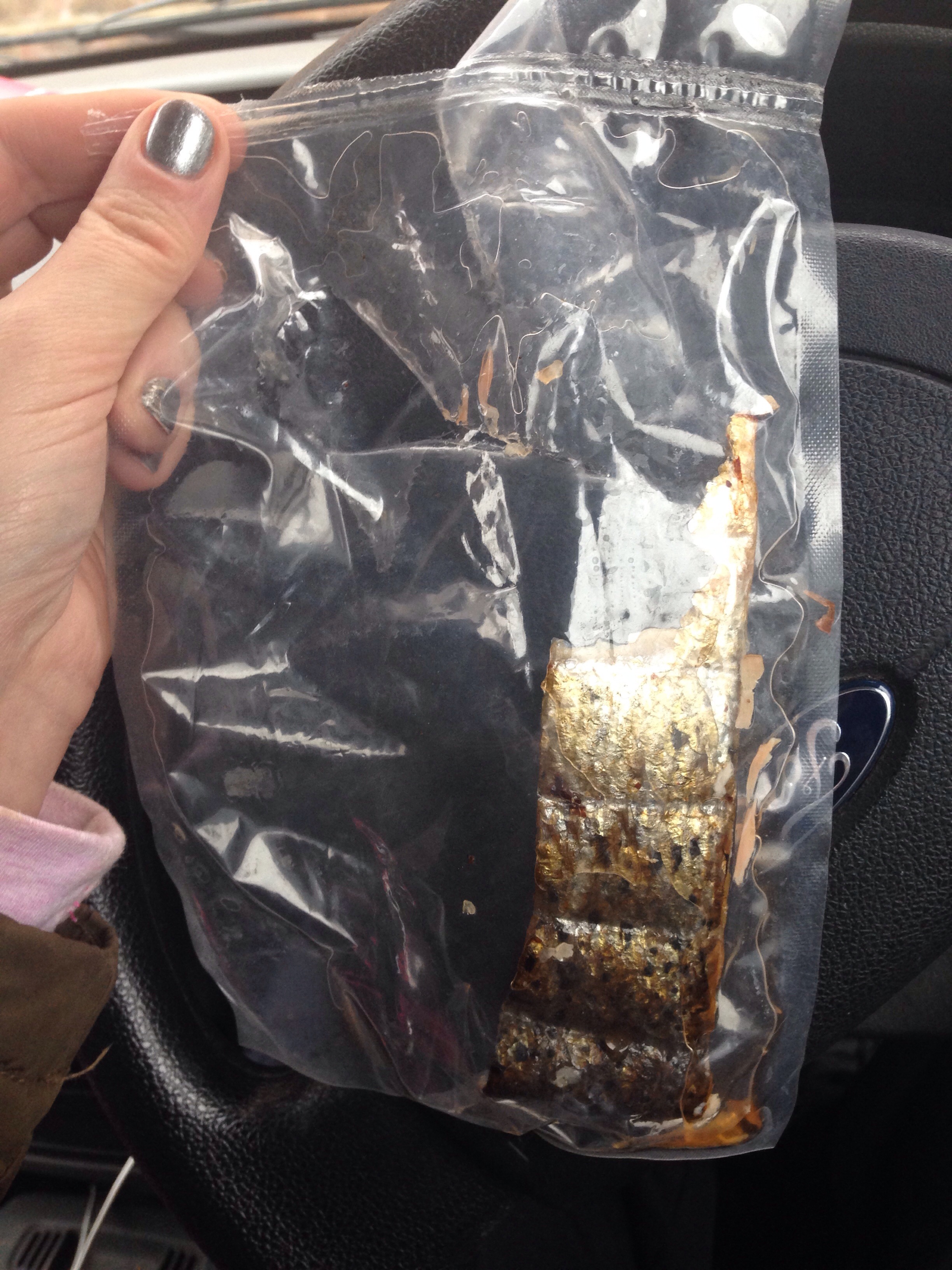
The hot smoked salmon didn’t eve make it as far as the M20.

20140215-122218.jpg

IN THE ARCHIVES – Plans, plans, plans

20140324-095754.jpg

There has been a fair bit of information floating around about Beta III but, to date, no plans. No plans – strangely – in the London Fire Brigade bundle when the ship was commissioned. However, the National Maritime Museum at Greenwich holds some of the Lloyds Survey Reports which – see below – seem to include some of the plans. Excellent news.
 
“I presume this is the firefloat BETA III (1926) built by Edwards & Co Ltd at Millwall (Yard No 816).  The collection of Lloyd’s Survey Reports on loan from Lloyd’s Register does include some documents for this vessel.  The first entry LSR made at the time of her construction is numbered LON 89673.  There is also a later LSR numbered LON 111697.  The following plans (all blueprints) are enclosed:
 
-Proposed T.S. Motor Firefloat for London County Council
General Arrangement (Profile & Decks), 1924
1:48 scale
 
-General Arrangement of Merryweather Firefloat for London Fire Brigade (Profile & Decks), 1925
1:48 scale
 
-Merryweather Firefloat for London Fire Brigade
Midship Section, 1925
1:12 scale
 
Next week we will be retrieving the above items from offsite storage.  Please let me know if you wish to view them in the Caird Library reading room here at the Greenwich site of the National Maritime Museum.”

20140215-121847.jpg

IN THE ARCHIVES – Further research – Lloyd’s List

20140324-095950.jpg

“Conserving Historic Vessels” suggested that searching Lloyds Register and Lloyds List for references to a ship were often worthwhile. This proved to be the case.

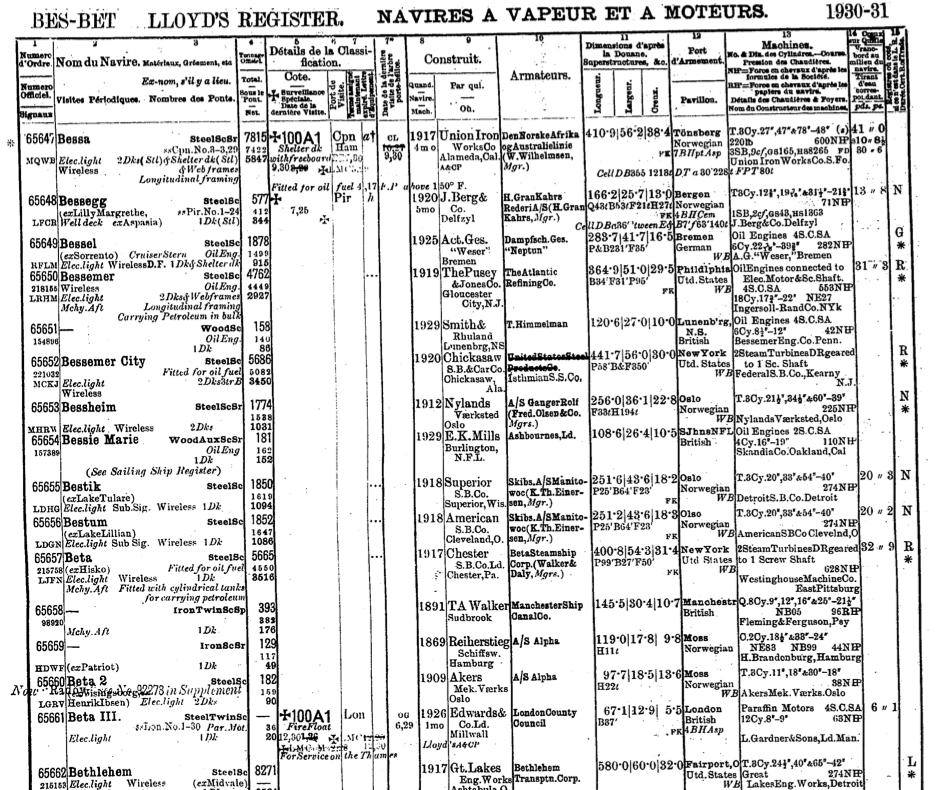
Lloyds Register of Shipping (accessible for between 1930 and 1945 here: www.plimsollshipdata.org) provided the following info. The explanations from the categories I have included were taken from the Plimsoll site. This has records for Beta III from 1930 to 1943 displaying basic info on length, engines and purpose.

The 1930-31 entry:
Screen shot 2014-02-09 at 19.24.57

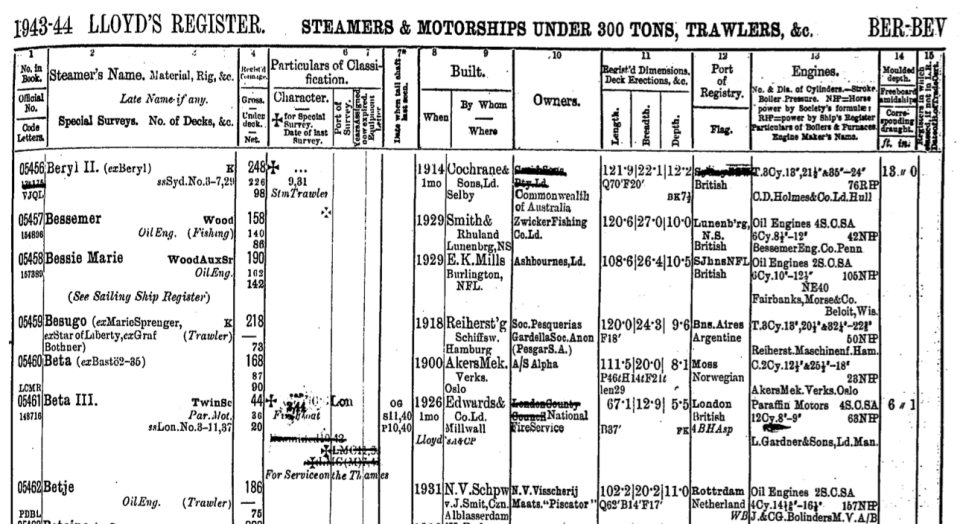
The 1943-4 entry:

Screen shot 2014-02-09 at 19.23.17

If anyone has any experience with interpreting these listings, please let me know. It is mostly in code and fairly impenetrable.

Official number – 148716 

(A number allocated to a British ship when first registered and which does not change over its British career, even if its name or owner changes.)

International code signal – LCMR 

(A unique four-character code which a ship could use to signal its name by a flag hoist or by radio)

Material, rig, machinery – “TwinSc. Par Mot. s8Lon.No.8-11,87” Not sure quite what all that means!!

(By 1937, most ships were steel, so only other hull materials (wood or iron) were noted.)

Tonnages – 44 tonnes gross, 36 under deck, 20 net

(Gross tonnage is a measure of the total enclosed space in a ship. Under deck tonnage excludes any superstructure. Net tonnage is the space available for carrying cargo or passengers – harbour and other dues are based on this figure.)

Built – 1926, by Edwards & Co Ltd of Millwall

Owners – National Fire Service (London County Council is crossed out)

Registered dimensions – Length 67.1 ft | Breadth 12.9 ft | Depth 5.5 ft

Engines – “Paraffin Motors 4S.C.S.A. 12 cy. 8″-9″. 68 NHP. L Gardner & Sons Ltd Manchester”

On some entries for Beta III there is a maltese cross symbol and 100A1. This means that the ship was built under “special survey”. Whereas 100A1 “indicated the character of the vessel, as assessed by the surveyor”. There is also a “DK” on some entries which suggests a direction finding device.

Any former names of the ship are noted alongside the date of change so I can try and find out if she was ever known as anything else.

2) Lloyd’s List – newspaper reporting shipping movements and casualties

Still haven’t figured quite how to access Lloyd’s Lists. I think they have copies at the National Maritime Museum in Greenwich and may also have copies of surveys carried out by Lloyds. May need to put in a phone call before I venture to deepest darkest south east London.

BETA III BOOK CLUB – “Conserving Historic Vessels”

20140209-165548.jpg

The weather continues to be pretty appalling and progress on the blasting has been slow. The only upside is that this has given me the opportunity to do a bit more of the behind the scenes research about the boat and boat conservation in general.

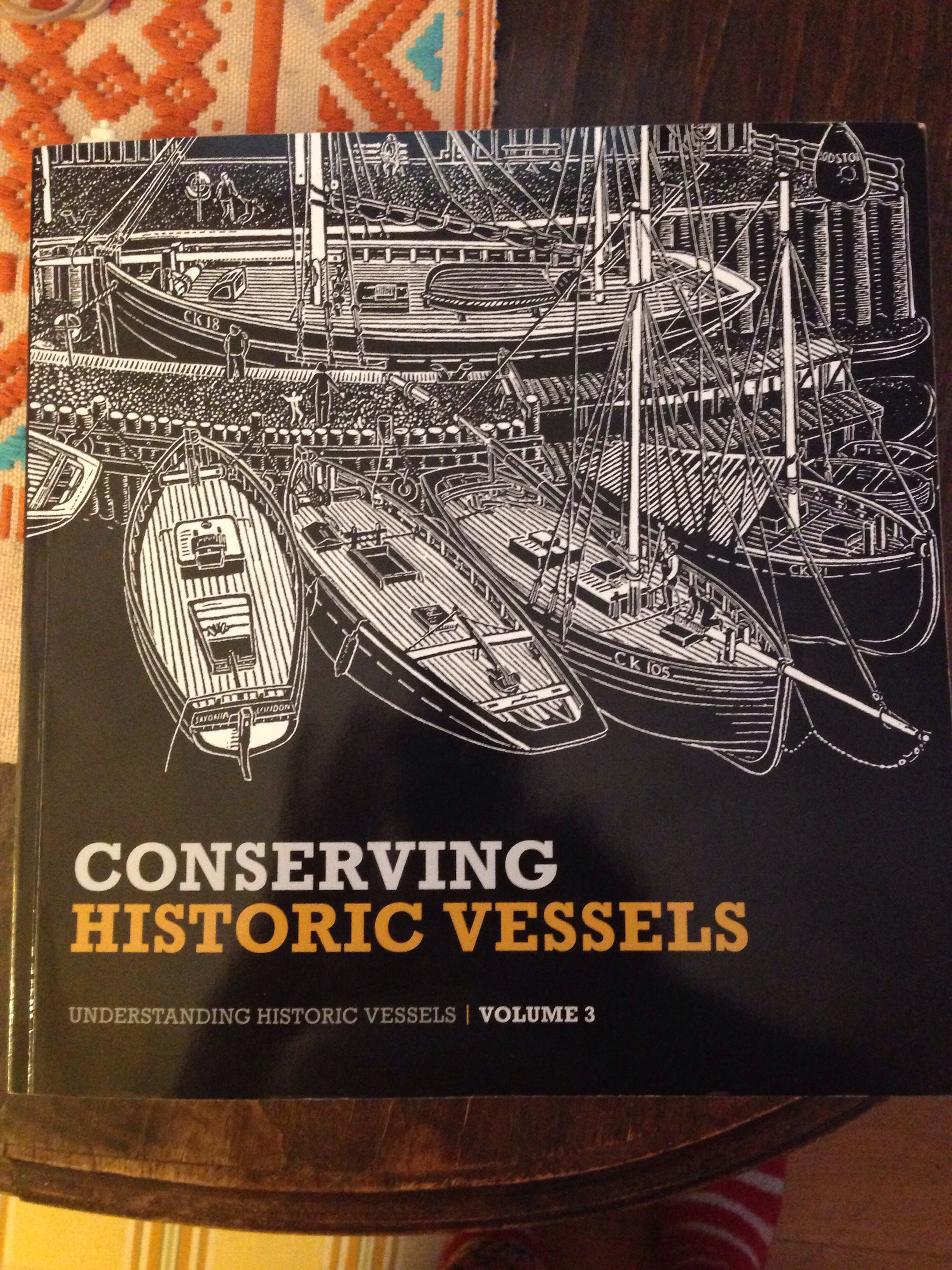
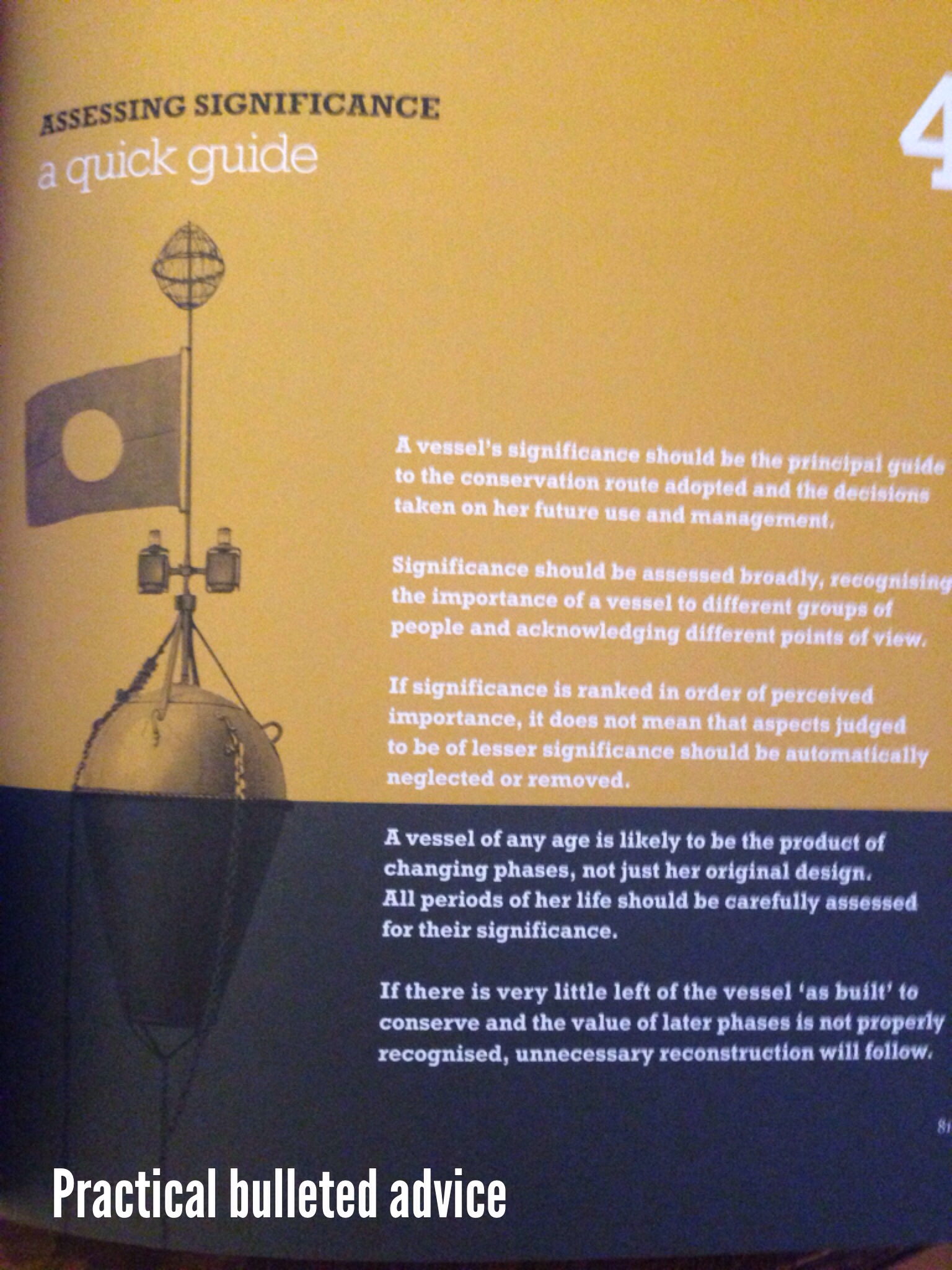
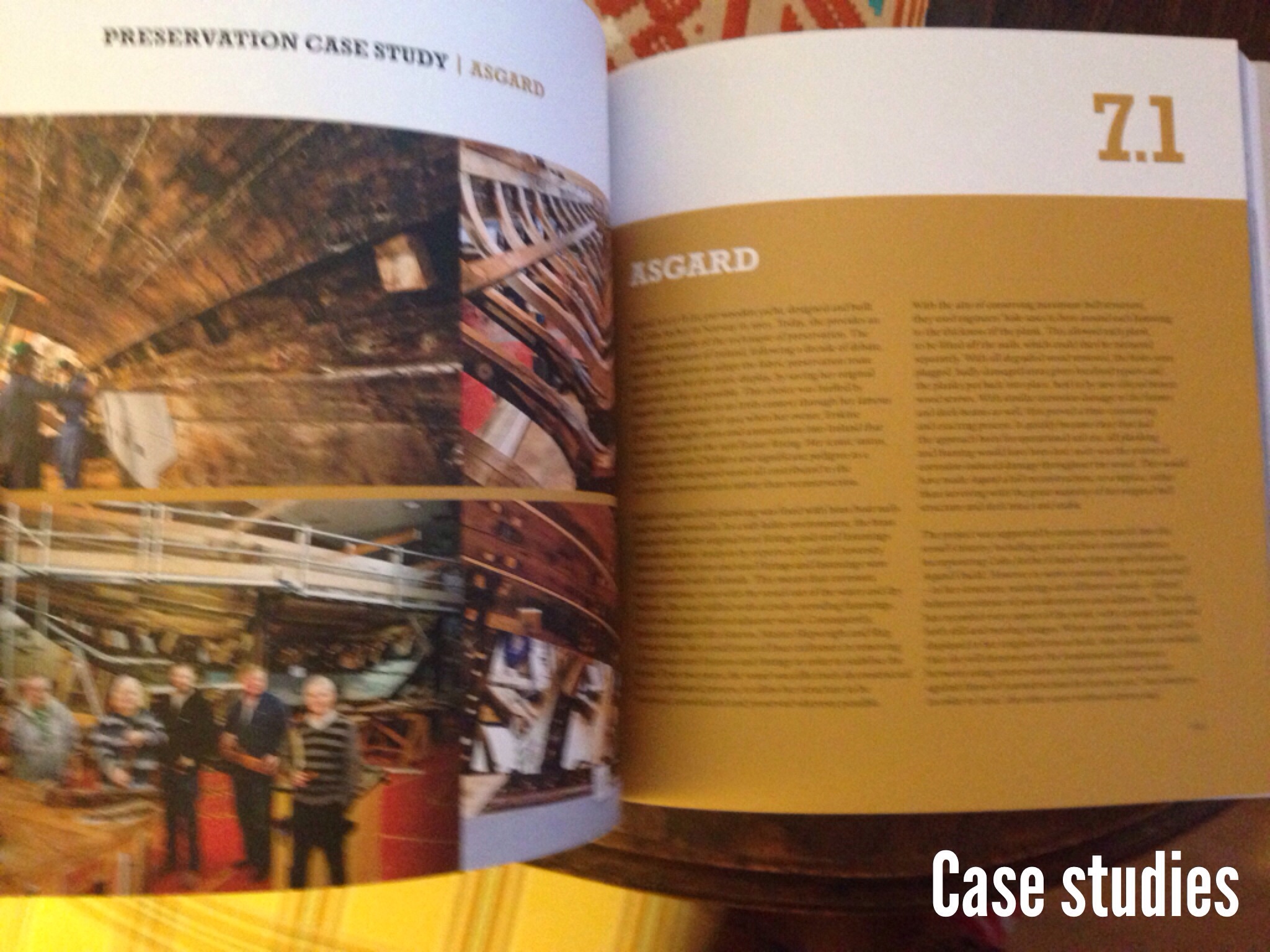
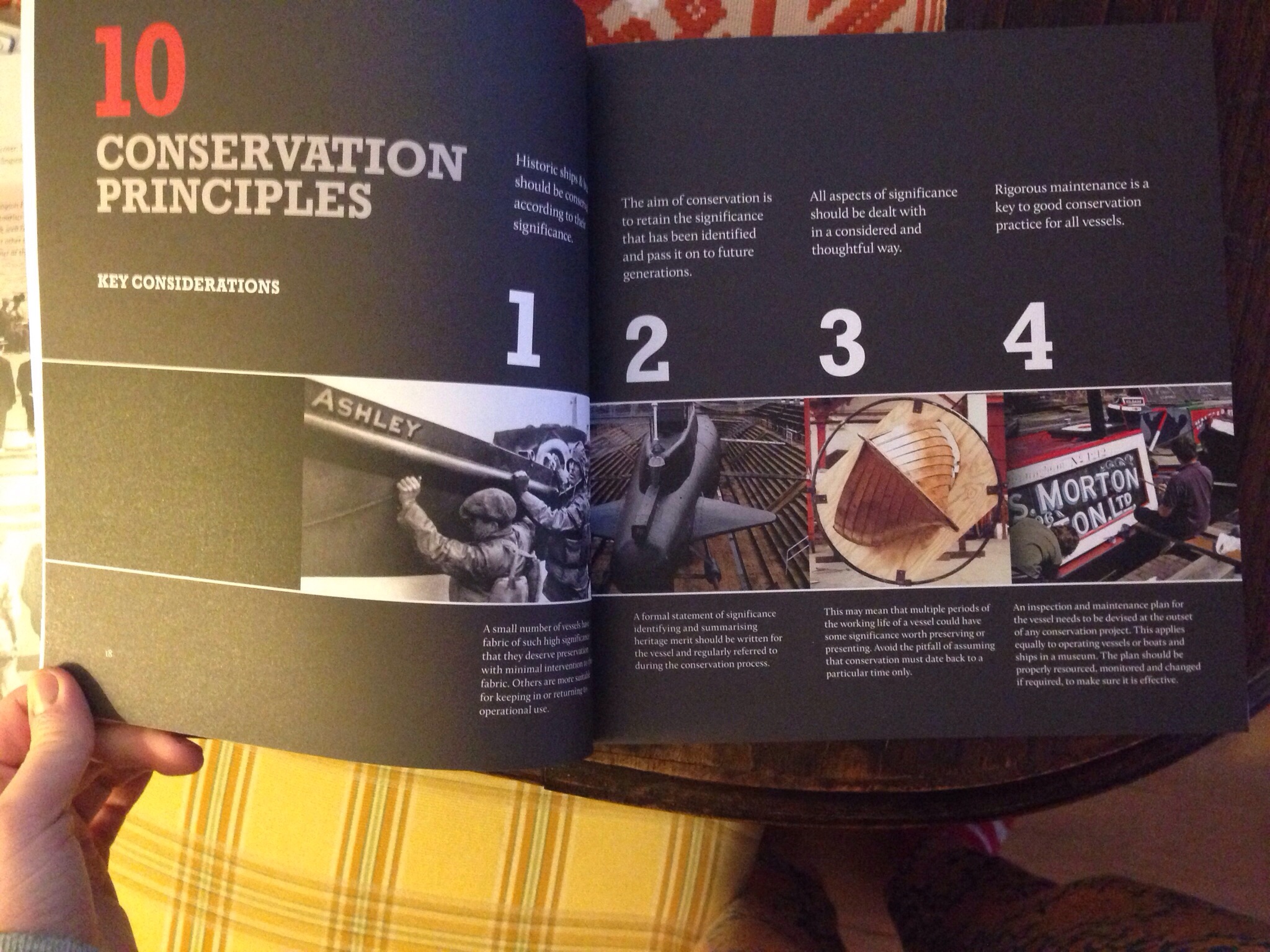
First up for review is “Conserving Historic Vessels”, published by National Historic Ships. I did hesitate before buying this one as it is a not inconsiderable thirty quid, however I am so glad I bought it. The book itself – as my blurry photos below try to show – is a delight. Thick paper, beautifully laid out, well thought out material and really contemporary illustrations and styling. While it is a great coffee table book – and I mean this as a compliment – from a design and content point of view, the info it contains is a solid summary of the conservation debate and the section about researching vessels has given me new ideas for research routes. Not just a pretty face.

20140209-170152.jpg20140209-170111.jpg

20140209-170120.jpg

20140209-170127.jpg

20140209-170141.jpg

“Conserving Historic Vessels” published by National Historic Ships. ISBN 978-0-9566554-0-0